Customer service chatbots
Introducing AI agents, the superpowered next generation of customer service chatbots. Autonomously resolving over 80% of interactions, AI agents take the strain away from support teams and streamline workflows at scale. Feel the power of Zendesk AI—get started with a free trial today.



Candace Marshall
Vice President, Product Marketing, AI and Automation
Last updated January 15, 2026
Customer service chatbots: The complete buyer’s guide
Basic customer service chatbots have damaged the reputation of self-service for far too long. We’re now facing a new wave of AI customer service chatbots that have the power to transform CX, employee service (ES), and customer support team efficiency.
24/7 service, personalised solutions, and game-changing budget reductions are just the tip of the iceberg with the right software. AI agents deliver real-time insights and sentiment analysis, so support teams can combine AI response speeds with genuine human empathy.
This guide uncovers all you need to know about AI chatbots, from their features and benefits to tips for choosing the right chatbot software for customer service.
More in this guide:
- What is a customer service chatbot?
- Benefits of using AI customer service chatbots
- Features customer service chatbots should have
- Common use cases of customer service chatbots
- Chatbots for customer service comparison chart
- The 10 best customer service chatbots
- How to choose the right social media customer service tools
- AI customer service chatbots: Emerging trends shaping the future
- Customer stories: How companies are using chatbots in customer service
- Frequently asked questions
- Try a chatbot for customer service
What is a customer service chatbot?A chatbot is an AI-powered tool that simulates human conversation, providing instant, 24/7 support across websites, mobile apps, and popular social messaging platforms. Today’s chatbots go beyond just serving help center articles. With the power of generative AI, they are evolving into autonomous AI agents capable of understanding complex conversations and responding just like human agents. These AI agents can also connect to your backend systems, delivering personalised assistance. Depending on your business’s automation needs, they can resolve over 80% of customer issues independently and seamlessly escalate to a human agent when necessary. |
Benefits of using AI customer service chatbots
As AI technology expands, so do the benefits of using chatbots. Here are some of the current benefits of using AI bots for customer service.
Instant answers 24/7
Chatbots enable businesses to provide answers to global and multilingual customer bases around the clock, meaning hours of operation, holidays, and time zones are no longer an obstacle. Unlike human agents who may have limited availability or require time to research information, chatbots can respond immediately, reducing customer wait times and enhancing customer satisfaction and loyalty.
Reduces costs and scales support
Support teams can handle greater interaction volumes while lowering costs by letting chatbots answer frequent questions, act as extra support reps, and triage support requests. Customer service chatbots can protect support teams from spikes in inbound support tickets, freeing agents to work on high-value tasks. Salon chain HelloSugar automates 66% of customer queries using AI agents and saves $14k per month, allowing it to double the number of locations without the headcount.
Increase agent efficiency
Chatbots boost agent efficiency by automating repetitive tasks and assisting with customer support activities, saving time and streamlining operations. In addition to resolving requests all on their own, bots can also collect key information for agents and route issues to the right service rep for the task.
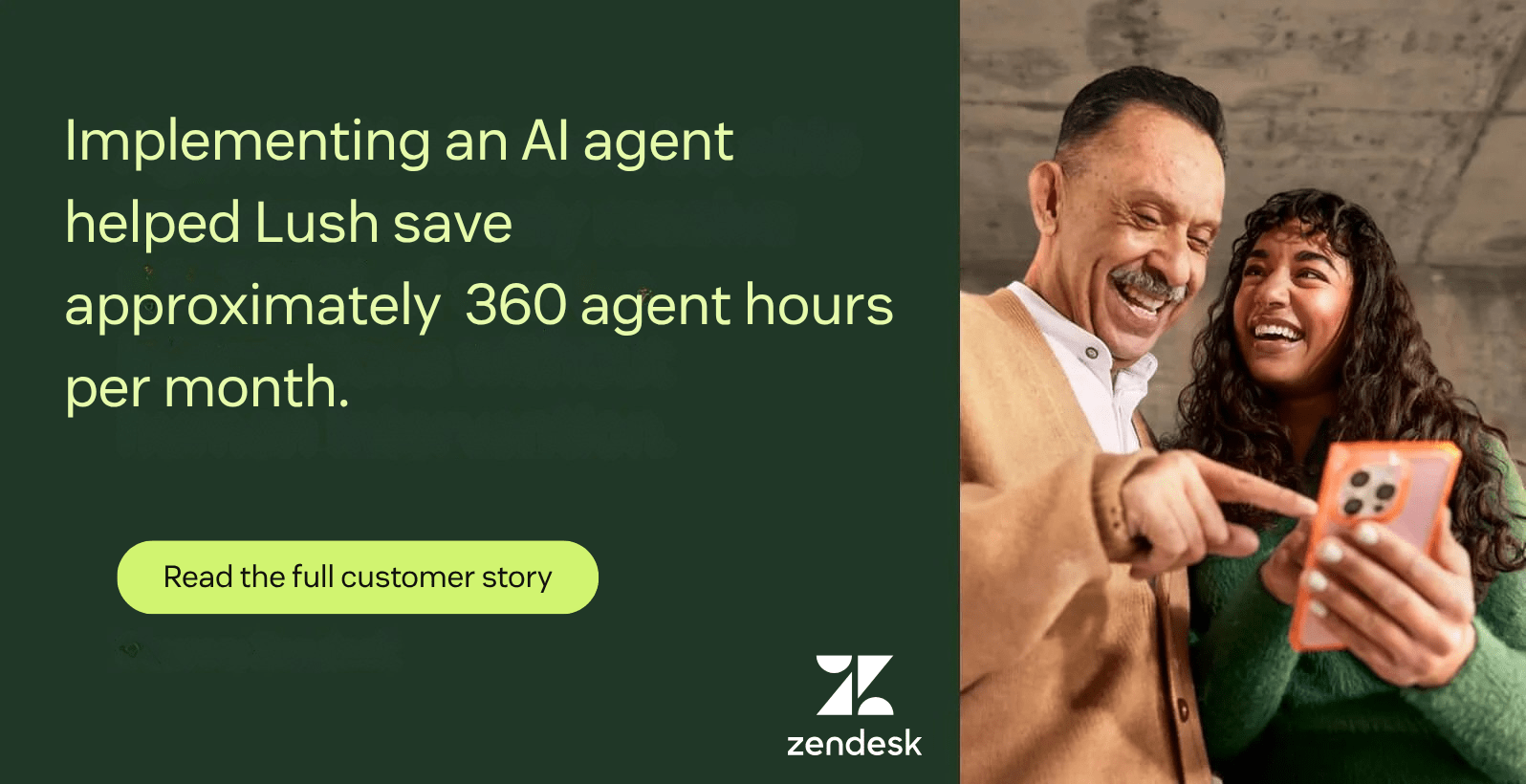
Cosmetics brand Lush used its AI agent to handle common enquiries, giving human agents more time to work on complex cases that require their skills. What’s more, its AI agent requests customer information upfront and adds tags and labels to incoming tickets, giving agents the context they need to solve issues faster. These efficiency gains save Lush roughly 5 minutes per ticket and 360 agent hours each month.
Enhances personalisation with customer context
AI chatbots can significantly enhance personalisation by connecting to backend systems and pulling relevant data during customer interactions. This allows them to access and utilise information, such as purchase history, preferences, and account details, tailoring their responses and recommendations to each customer. For example, an AI agent could suggest products based on a customer's previous purchases or offer personalised assistance with troubleshooting issues.
Improves CX
Chatbots' ability to communicate in multiple languages allows them to serve a diverse customer base, ensuring timely, multilingual support worldwide. AI agents go even further, delivering fast, personalised responses tailored to each customer. This immediate, customised assistance significantly enhances the overall customer experience.
Omnichannel support
Customer service chatbots enable businesses to provide omnichannel support by offering consistent and seamless interactions across channels. Bots can engage with customers through their preferred methods, such as live chat, messaging apps, or social media, allowing customers to get help where they already are.
Easy setup and flexibility
Despite being state-of-the-art technology, customer service chatbots are remarkably easy to set up and integrate with your already established systems. Due to their flexible and customisable nature, support teams have no trouble making chatbots work for them—not the other way around.
High-level accuracy and contextual understanding
Advanced natural language understanding (NLU) revolutionises customer service chatbots. It allows them to understand and process customer interactions, detecting intent and meanings no matter the phrasing and grammar. This, along with high volumes of customer data drawn from connected business systems, empowers AI agents to deliver the most accurate and fine-tuned responses.
Features customer service chatbots should have
To achieve the above benefits, chatbots must have the following core features:
-
Easy deployment and low-code customisation: The best chatbots keep time to value down to a minimum. No elaborate training sessions and steep learning curves. Support teams should be able to deploy AI agents in minutes, not days.
- AI-powered insights: AI agents can provide valuable insights into which support resolutions to automate next, helping streamline your service operations even further. Additionally, it’s essential to choose a bot solution that tracks its impact on your overall service performance, monitoring key metrics such as response times, cost to serve, and customer retention across all channels.
Multilingual, omnichannel support: There shouldn’t be restrictions on language or channel support. Chatbots should be able to interact with customers in their preferred language, across all platforms, from your website to social messaging apps. This ensures consistent service delivery across all customer touchpoints.
Automated routine task handling: Chatbot automations are the real time and money-saver. This tool should free up your support agents by automating routine tasks, letting them focus on what really matters.
- Quality assurance (QA) tools: These tools monitor and evaluate chatbot interactions to ensure consistent and accurate responses. They help maintain high service standards and identify areas for improvement.
Cost effective pricing: Customer service chatbots only have a high ROI if the initial cost is budget-friendly. Carefully assess the pricing in relation to your estimated support team savings to guarantee the investment is worth it.
Common use cases of customer service chatbots
Thanks to modern innovations, chatbot technology can be used in many different ways and for all kinds of industries. Some of the most common use cases of AI chatbots for customer service include:
- Events and entertainment: Answering queries, booking tickets for customers, and issuing refunds.
- e-commerce and retail Recommending products, aiding with product search, and checking stock and item location.
- Restaurants and takeaway services: Providing delivery information and tracking, responding to customer complaints, and carrying out surveys.
- Travel and hospitality: Booking flights and hotels, delivering booking information, replying to questions, and automating check-in and check-out—AI for travel is a booming business.
- SaaS and Tech: Troubleshooting, ticket routing, and customer onboarding.
Chatbots for customer service comparison chart
|
Software |
Best for |
Starting price |
Free trial |
|
Autonomous AI agents |
As low as $1.00 per automated resolution |
14 days | |
|
Routine task handling |
$9 per user/month (billed annually) (limited tools) |
Unavailable | |
|
Integrations with other systems |
$7 per operating licence/month (1 custom chatbot) |
15 days | |
|
Straightforward flow builder |
$32.50 per user/month (includes 50 AI conversations) |
7 days | |
|
E-commerce integrations |
$10 per user/month (50 tickets/month) |
7 days | |
|
Integrations |
Contact sales |
Unavailable | |
|
Natural AI conversations |
$29 per user/month and 0.99 per resolution (billed annually) |
14 days | |
|
Low-code tools |
Contact sales |
14 days | |
|
ProPofs Live Chat |
Drag-and-drop file uploads |
$0 per user/month (limited users) |
Unavailable |
|
E-commerce businesses |
Contact sales |
14 days | |
|
Customisation |
$29 per agent/month (billed annually) |
Available | |
|
Analytics and reporting |
Contact sales |
Unavailable | |
|
Developers |
$99 per month |
14 days |
The 13 best customer service chatbots
Let’s take a look at the top 13 AI chatbots for customer service on the market.
- Zendesk: Best for autonomous AI agents
- HubSpot: Best for routine task handling
- Zoho Desk: Best for integration with Zoho ecosystem
- Tidio: Best for straightforward flow builder
- Gorgias: Best for e-commerce integrations
- Netomi: Best for CRM integration
- Intercom: Best for natural AI conversations
- Ada: Best for low-code tools
- ProProfs Live Chat: Best for drag-and-drop templates
- Certainly: Best for E-commerce businesses
- Pi: Best for customisation
- Poe: Customer analytics and reporting
- Ada: Best for developers
1. Zendesk
Best for autonomous AI agents
|
Starting price |
Free trial |
Key features |
|
As low as $1.00 per automated resolution Explore more Zendesk pricing plans. |
14 days |
|
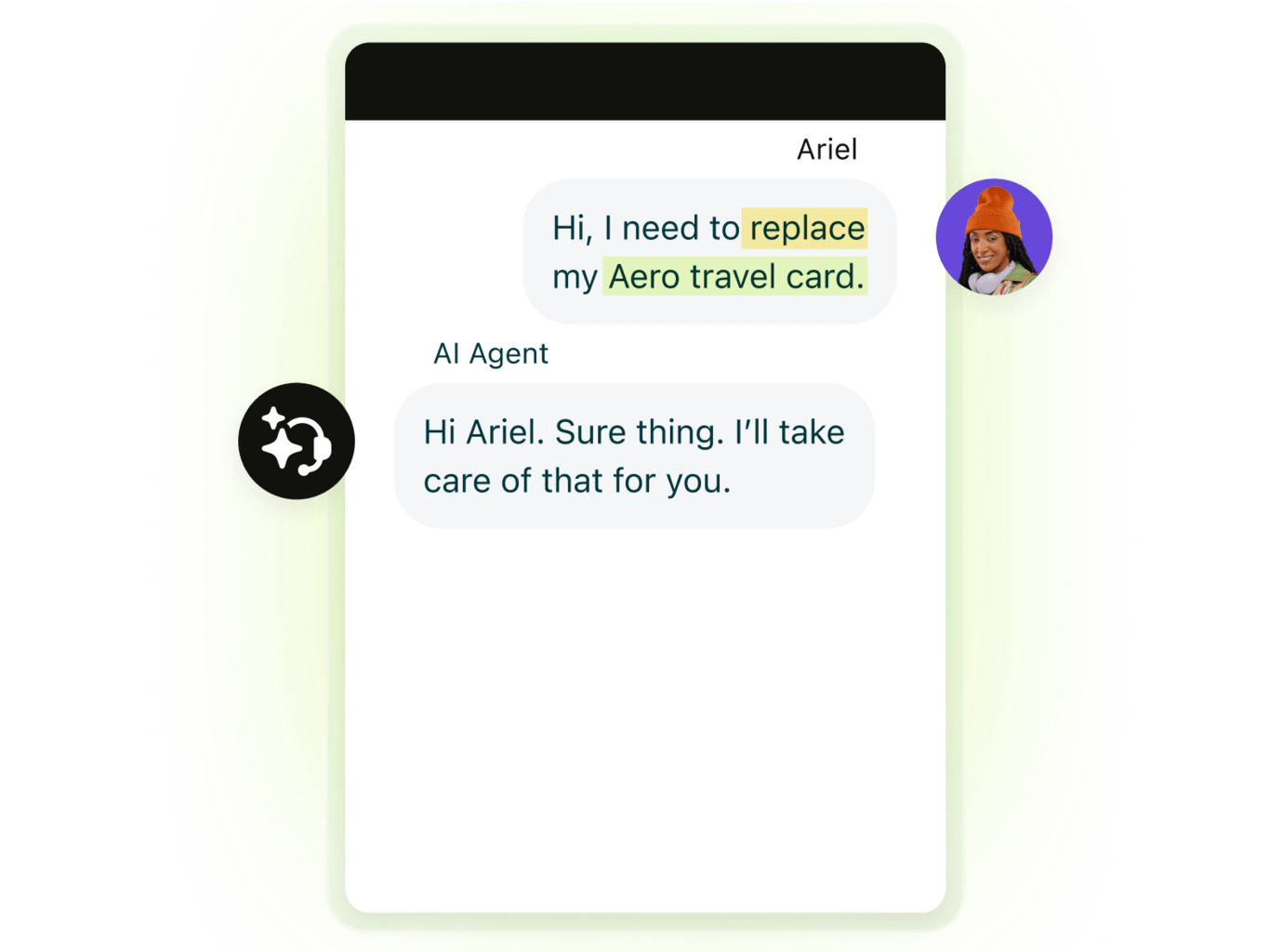
Zendesk AI agents are the most autonomous customer service bots, pre-trained on over 18 billion real interactions to handle complex requests and grasp the nuances of CX from day one—no technical resources required. With Zendesk, you can provide 24/7 multilingual support across all preferred channels and even customise a bot persona to seamlessly align with your brand.
To set up your AI agent, simply connect your knowledge base, and your chatbot will be ready in minutes. For more control, use the intuitive, no-code builder to create rich, interactive, and personalised conversation flows. Zendesk AI agents also integrate with your business systems, enabling them to draw on large volumes of data for highly personalised responses, which in turn boosts customer loyalty. AI agents scale effortlessly to meet your automation needs, now and in the future.
Zendesk's AI-powered analytics and QA tools offer critical insights to optimise your AI agents. They automatically analyse conversation data, generating actionable reports with clear guidance on what to automate or refine next. Automated issue detection ensures high service quality, while sentiment analysis fine-tunes conversation flows for a better customer experience.
Pricing: As low as $1.00 per automated resolution. A 14-day free trial is available.
|
Pros |
Cons |
|
|
What people are saying:
- "The platform offers robust automation tools and reusable macros, enabling quick and consistent responses to common customer enquiries."
- "Zendesk also offers AI-powered bots and intelligent ticket routing for faster resolution."
- "The AI IT Agents feature helps automate repetitive queries and speeds up response time."
Explore more Zendesk pricing plans and experience the Zendesk AI effect with an interactive AI agent demo.
2. HubSpot
Best for routine task handling

|
Starting price |
Free trial |
Key features |
|
$9 per user/month (billed annually) (limited tools) |
14 days |
|
HubSpot provides tools for marketing, sales, content management, operations, and customer support. The company states that its AI customer agent, Breeze, resolves over 65% of conversations automatically and is available 24/7.
Using pre-existing Hubspot CRM data and knowledge base information, the chatbot ensures that the responses are both accurate and personalised. What’s more, customers can access the AI agent almost anywhere, from Facebook and Whatsapp to email.
Plans start at $9 per month, but note that customer agents are attached to a credit-based system, so you’ll need to purchase additional credits on top of your monthly or annual subscription.
Pricing: A free plan is available with limited tools. Paid plans start at $6 per user/month, billed annually.
Recommended reading: Learn how HubSpot integrates with Zendesk and how Zendesk vs. HubSpot compare.
|
Pros |
Cons |
|
|
What people are saying:
- "The automation features save us hours every week, and the AI tools like Breeze make responding to customers faster and smarter."
- "Some of the more advanced features, like custom reporting or advanced automation, are locked behind higher-tier plans."
- "It's not as flexible or robust as specialised support platforms like Zendesk"
3. Zoho SalesIQ
Best for integration with Zoho ecosystem
|
Starting price |
Free trial |
Key features |
|
$7 per operator licence/month (1 custom chatbot) |
15 days |
|
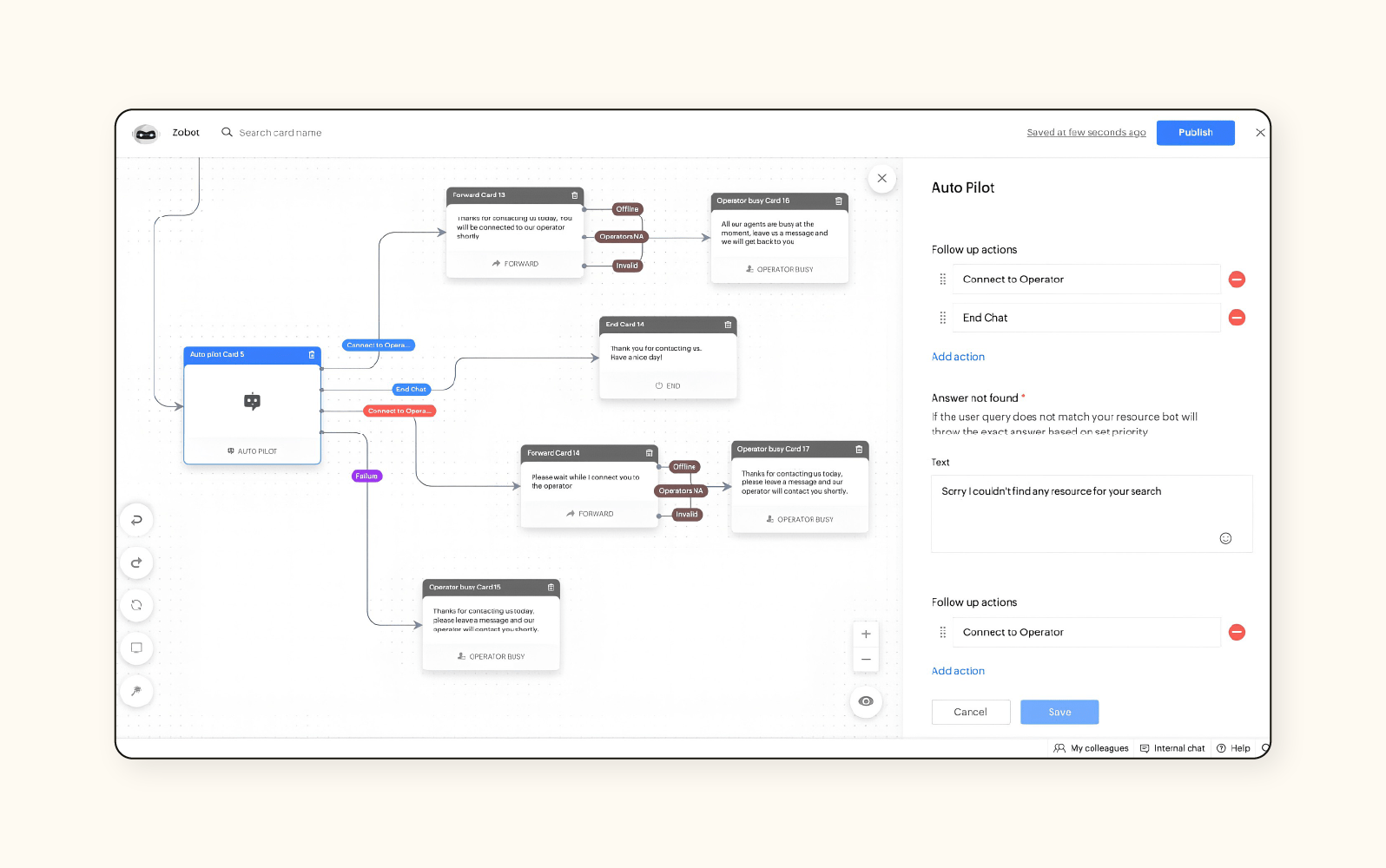
Zoho SalesIQ provides users with a few different types of chatbot: custom chatbots, AI chatbots (Answer Bot), and a hybrid version of the two. For custom chatbots, the builder has a drag-and-drop interface allowing you to create pre-defined responses and build chatbot flows—no code required. Chatbots can work in up to 30 languages, automatically detecting the language of incoming text.
The Answer Bot connects with a business’s knowledge base to pull answers, articles, and information on company policies. Users can add responses to the bot’s vocabulary to differentiate conversations and create a library of terms used by visitors so it can understand more inquiries.
Going the extra kilometre, the Answer Bot can connect with Zia or OpenAI for responses that require information outside of a company’s knowledge base. Zoho also offers a hybrid model, where users can add AI Answer Bot capabilities to a standard custom chatbot flow. The catch is that both the AI and hybrid chatbots are only available in the Enterprise plan.
Pricing: Paid plans start at $7 per month, billed annually. A free plan for three operators and a 15-day free trial are available.
Recommended reading: Learn how Zoho integrates with Zendesk and how Zendesk vs. Zoho compare.
|
Pros |
Cons |
|
|
What people are saying:
- "It is a great tool for tracking your leads, sales, quotes and many other features."
- "The Codeless chatbot builder is straightforward for non-coders to build a bot."
- "Bots are triggered at the wrong instances and sometimes even the chat doesn't allow you to answer if some bot is triggered."
4. Tidio
Best for straightforward flow builder
|
Starting price |
Free trial |
Key features |
|
$32.50 per user/month (includes 50 AI conversations) |
7 days |
|
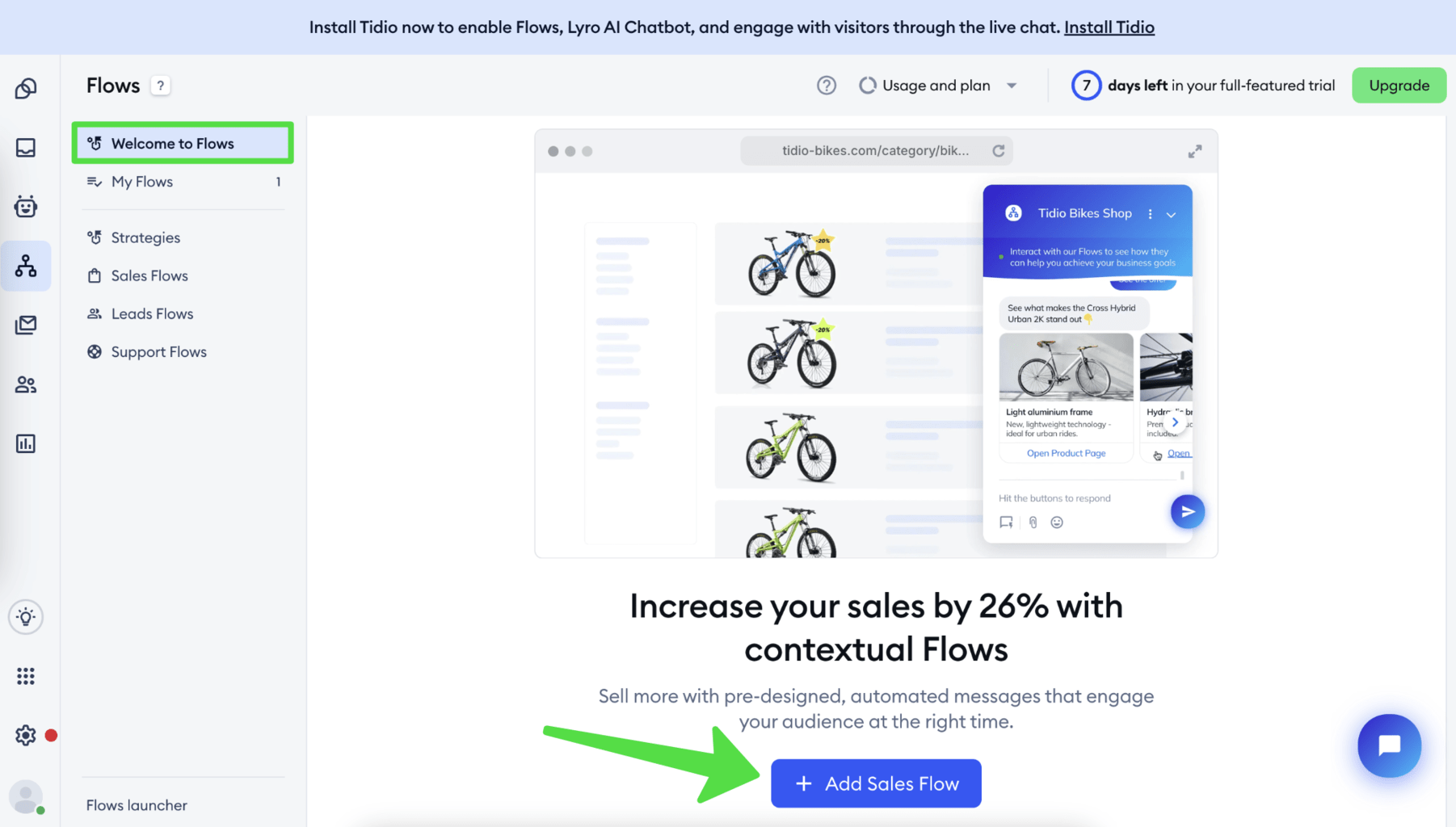
Tidio’s Lyro AI agent deserves praise for its 67% autonomous resolution rate and smooth integrations with other software, including Zendesk. Its chat flow builder is another highlight, making it straightforward for users to get started with pre-made templates that can be easily customised.
The company proudly states that Lyro draws data only from its own knowledge base, which guarantees a higher rate of accuracy and cuts out any chance of AI hallucinations slipping into responses. On the other hand, this may be considered limiting when it comes to providing a well-rounded CX experience.
Lyro can be purchased as a standalone product with an allotted number of AI conversations refreshing monthly. Alternatively, AI agent conversations are included in other packages, but only as a one-time quantity of 50 in the Starter and Growth plans.
Pricing: The AI Agent standalone plan starts at $32.50 per user/month and includes 50 AI conversations.
|
Pros |
Cons |
|
|
What people are saying:
- "Lyro, their AI bot, takes care of most common questions, and I especially like how I can build custom flows for keyword search optimisation."
- "There are features that allow you to transfer conversations to specific team members which are helpful for account specific questions and sensitive situations."
- "Compared to some alternatives, it feels like the cost is on the higher side, especially when you need more advanced features."
5. Gorgias
Best for e-commerce integrations
|
Starting price |
Free trial |
Key features |
|
$50 per agent/month (billed annually) |
7 days |
|
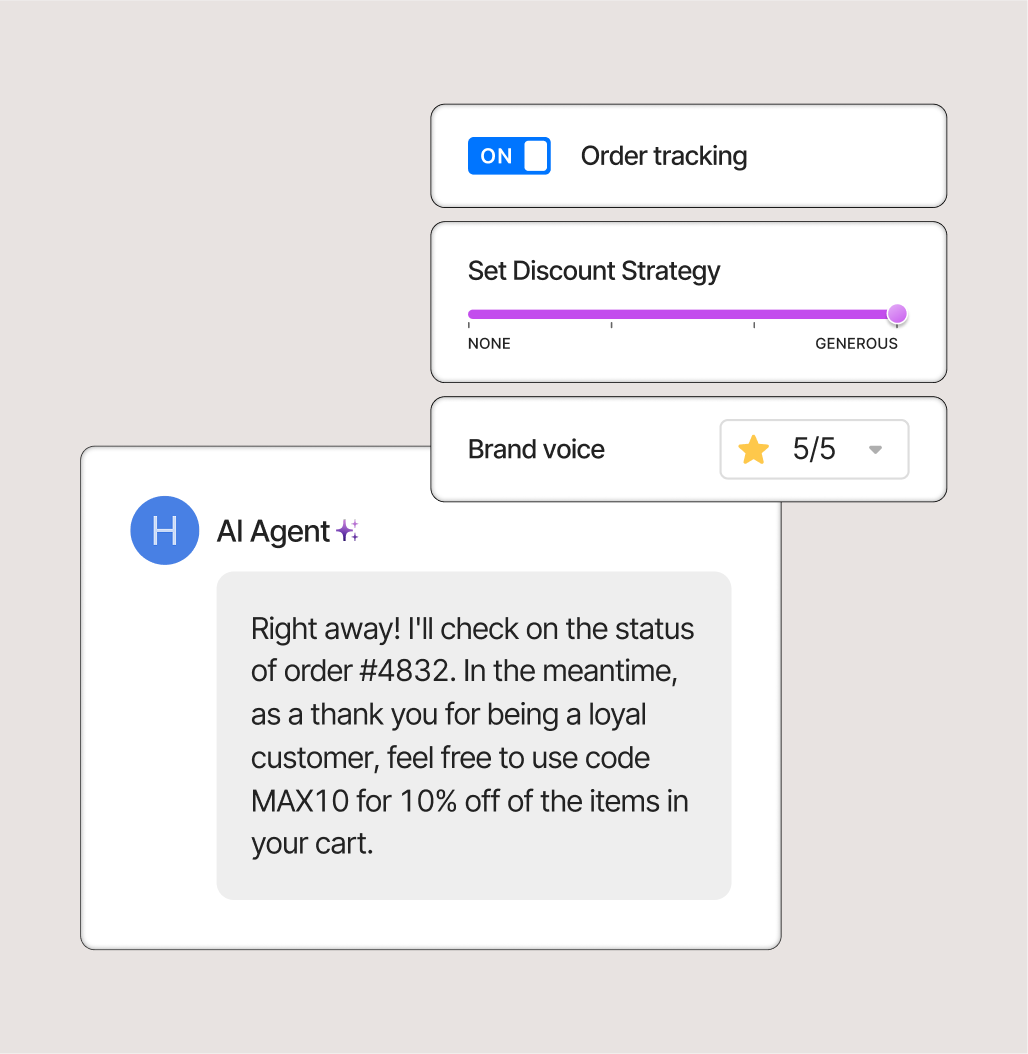
Gorgias has two AI agents designed specifically for e-commerce businesses: shopping assistant and support agent. These chatbots for customer service handle routine tasks like responding to return requests and answering FAQs, while also being able to take actions such as escalating sensitive enquiries and issuing refunds.
It’s easy to align the AI agent with your brand voice as the software closely analyses your brand policies and protocols to ensure that no customer is misinformed. If the chatbot can’t find the information it needs to respond accurately, it hands over seamlessly to a human agent.
Meeting the demands of shoppers, Gorgias operates across all kinds of channels, from social media to email and SMS (but this needs to be purchased as an add-on). It also integrates with e-commerce platforms like Shopify, WooCommerce, and Magento (the latter is only available in high-tier plans).
Pricing: The Starter plan is $10 per agent per month and includes 50 helpdesk tickets.
|
Pros |
Cons |
|
|
What people are saying:
- "What I like best about Gorgias is how intuitive and easy to use it is."
- "Some automation features could be more flexible or customisable to better fit specific workflows."
- "If you manage a high volume of tickets Gorgias is not reliable. The integration may crash constantly."
6. Netomi
Best for CRM integration

|
Starting price |
Free trial |
Key features |
|
Contact sales |
14 days |
|
The Netomi chatbot fully integrates with existing backend customer service systems, like Zendesk, so businesses can keep using the software they’re familiar with. For instance, the platform can access customer and order information within a CRM system to determine and communicate the status of a customer’s order.
The chatbot’s omnichannel support allows businesses to deploy the chatbot across various platforms, such as email, social media, live chat, and messaging apps. This capability lets customers receive support on whichever channel they use. It can maintain the context of conversations across different platforms for customers who might switch between channels during their interaction.
Providing real-time insights into customer interactions, the AI copilot supports human agents in handling complex issues quickly and effectively. Moreover, Netomi’s AI agent is equipped with analytics and reporting tools, helping support teams understand trends, measure performance, and identify areas for improvement.
Pricing: Contact Netomi for pricing.
|
Pros |
Cons |
|
|
What people are saying:
- "Training our AI to resolve and deflect thousands of tickets has saved our company millions of dollars."
- "Out-of-the-box integration with a variety of CSM Tools (Zendesk, Gladly, etc.)."
- "Initial implementation and setup does take quite a bit of time and attention, so for a small team like ours, it did take a little longer than we'd hoped to start seeing value."
7. Intercom
Best for natural AI conversations

|
Starting price |
Free trial |
Key features |
|
$29 per user/month and 0.99 per resolution (billed annually) |
14 days |
|
Intercom created the Fin chatbot using OpenAI to complement its customer service platform. In addition to automating routine tasks, Fin can understand complex questions, follow up with clarifying questions, and break down hard-to-understand topics. Businesses can integrate Fin with other Intercom features, such as messaging, help center, and live chat.
Fin pulls information exclusively from your business’s existing knowledge base and can hand over more complex requests to trained staff members. Alternatively, human agents can work alongside Fin in copilot mode, but for unlimited usage, this must be purchased as an add-on.
Additionally, Fin offers analytics and reporting capabilities, providing businesses with insights into customer interactions. These analytics help companies track the chatbot's performance, monitor customer satisfaction, and identify areas for improvement. By analysing data from interactions, businesses can refine their support strategies and change Fin's responses.
Pricing: Plans start at $29 per seat/month, billed annually, and $0.99 per resolution. A 14-day free trial is available.
Recommended reading: Learn how Intercom integrates with Zendesk and how Zendesk vs. Intercom compare.
|
Pros |
Cons |
|
|
What people are saying:
- "It answers simple questions really well, as long as there’s content available."
- "The setup is straightforward, and it requires minimal additional training for agents."
- "Compared to other AI chatbot solutions we’ve evaluated, Fin’s pricing feels high, especially for teams handling large ticket volumes."
8. Ada
Best for no-code authoring

|
Starting price |
Free trial |
Key features |
|
Contact sales Explore more Zendesk pricing plans. |
14 days |
|
Ada is an automated chatbot powered by AI and NLP, allowing it to understand and conversationally respond to natural language. Its capabilities extend to voice channels, letting it field phone calls and answer common questions. It deflects repetitive tickets with a self-serve solution that lets customers change their information, upgrade their accounts, schedule appointments and make payments.
Ada’s automation platform responds to a customer’s information, intent, and interests with tailored answers, proactive discounts, and recommendations in over 100 languages. Businesses can build their bots in a no-code interface, creating custom conversation workflows.
Once the bot is live, you can continue to refine its performance regarding its tone and the proper procedures it should follow. Businesses can also set up variants of the same bot to test how the differences impact performance. Additionally, built-in QA tools read customer transcripts to identify areas of opportunity.
Pricing: Contact Ada for pricing. A 14-day free trial is available.
Recommended reading: Learn how Ada integrates with Zendesk.
|
Pros |
Cons |
|
|
What people are saying:
- "Ada helped our small support team contain most "easy-to-resolve" customer enquiries, freeing-up more time for agents to go through our backlog."
- "The tool is intuitive and gives a lot of autonomy to those who don't understand much about programming."
- "I think Ada is a good chatbot but you are limited in some of the customisations especially if you have more than one product line."
9. ProProfs Live Chat
Best for drag-and-drop templates
|
Starting price |
Free trial |
Key features |
|
$0 per user/month (limited users) |
Unavailable |
|
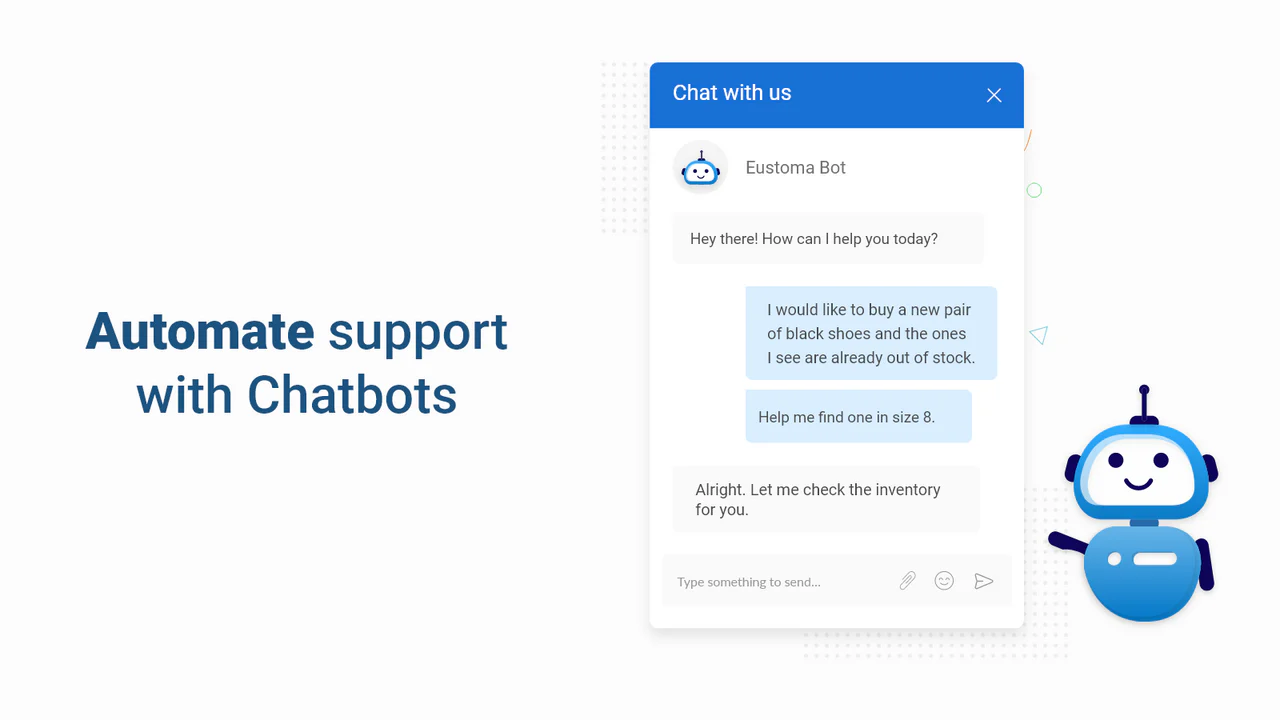
As one of the only completely free (for one user) AI chatbots on the market, ProProfs Live Chat has all the core tools needed to create a high-functioning AI agent. The pre-designed chatbot templates are categorised by purpose and can be customised to your specific needs.
ProProfs is designed to upgrade your CX with simple request automations and AI agent to human agent handover. For the full experience, the company recommends connecting chatbots to ProProfs Help Desk in order to automate ticket creation and routing to the correct team members.
AI agents are trained using each business’s data and can be tested prior to being launched. Once live, chatbots operate 24/7, offering precise responses pulled from the resources you’ve selected.
Pricing: ProProfs Live Chat is free for individuals. The plan for teams starts at $39.99.
|
Pros |
Cons |
|
|
What people are saying:
- "I like the team management features of the tool where we can easily supervise the chat."
- "It helps us reach out to customers faster and help them get instant support efficiently."
- "For a few days we weren’t able to track the correct data on our support reps through the software."
10. Certainly
Best for E-commerce businesses

|
Starting price |
Free trial |
Key features |
|
Contact sales |
14 days |
|
Certainly is a bot-building platform made especially to help e-commerce teams automate and personalise customer service conversations. It can connect to the business’s e-commerce platform and integrate with other systems, such as a CRM, to access and share customer data.
The Certainly AI assistant can recommend products, upsell, guide users through checkout, and resolve customer queries related to complaints, product returns, refunds, and order tracking. It also gathers zero-party data—information deliberately provided by customers—from conversations with visitors, which agents can use to customise shopping experiences and increase customer lifetime value.
The platform offers analytics tools that track customer interactions, allowing businesses to gain insights into customer behaviour and chatbot performance. These insights can continually refine the chatbot's responses and workflows. Plus, it has multiple APIs and webhook (automated communication between two apps) options for reporting, data sharing, and more.
Pricing: Contact sales for a custom quote. A 14-day free trial is available.
Recommended reading: Learn how Certainly integrates with Zendesk.
|
Pros |
Cons |
|
|
What people are saying:
- "Their Webhook building features enable us to offer an intelligent Bot that may help customers self-service themselves."
- "Their chat-bot development is top-notch, and the compatibility with Zendesk is seamless."
- "The software has a tendency to freeze while receiving a lot of data, which increases the chance that changes may be made incorrectly."
11. Dixa
Useful customisations

|
Starting price |
Free trial |
Key features |
|
$29 per agent/month (billed annually) |
Available |
|
Dixa’s chatbot for customer service, Mim, is powered by OpenAI and built to support companies in all kinds of industries, from retail and travel to financial services. Although this AI agent can handle up to 60% of conversations autonomously, it also facilitates a smooth handover to a human agent when faced with a complex issue.
Mim pulls answers from the company knowledge base, so its responses are as up-to-date as your articles. When integrated with other business tools, like CRM and e-commerce platforms, it can also perform actions such as updating customer details. Plus, Mim’s interactions can always be on brand, with custom instructions and personas.
The tool is also context-aware, meaning it can handle personalised support requests and respond in over 95 languages. To use the Dixa chatbot, you will need to purchase a plan and opt into the chatbot plan for $0.50 per conversation. Additionally, Dixa has a seven-seat minimum.
Pricing: Plans start at $39 per agent/month, billed annually. A free trial is available.
|
Pros |
Cons |
|
|
What people are saying:
- "The software operates reliably and provides a user-friendly interface that is straightforward to navigate."
- "There is also a good range of AI support, which works particularly well with case summaries and translations and offers great support!"
- "I know that setting up the different chats has been at times challenging and time consuming for our tech team."
12. Zowie
Customer analytics and reporting

|
Starting price |
Free trial |
Key features |
|
Contact sales |
Unavailable |
|
Zowie is a self-learning AI that uses data to understand how to respond to customer questions, meaning it leverages machine learning to improve its responses over time. This solution is prevalent among e-commerce companies that offer consumer goods that fall under categories like cosmetics, apparel, appliances, and electronics.
Zowie pulls information from several data points, such as historical conversations, knowledge bases, FAQ pages, and ongoing conversations. Additionally, it connects with e-commerce platforms, CRMs, and other systems to share information.
Zowie offers analytics and reporting features that provide businesses with insights into chatbot performance, customer satisfaction, and areas for improvement. These insights use generative AI to highlight generated revenue, identify shoppers' interests, and update a live dashboard.
Pricing: Contact Zowie for pricing. There is no free trial available.
Recommended reading: Learn how Zowie integrates with Zendesk.
|
Pros |
Cons |
|
|
What people are saying:
- "Zowie has shown that AI can be the real-deal in providing efficient customer service."
- "There is a lot of very detailed data in analytics but would like to see more useful and accessible data to provide people with instant feedback."
- "For us, what we really be is lacking is the user interface, with our previous provider we could access shopify features and that is something I would love to see with Zowie."
13. Meya
Best for startups

|
Starting price |
Free trial |
Key features |
|
$99 per month |
14 days |
|
Meya bills itself as an automation platform consisting of three components: Grid, Orb, and Console. The Grid is Meya’s backend, where you can code conversational workflows in several languages. The Orb is essentially the pre-built chatbot that businesses can customise and embed on their app, platform, or website. Finally, your team can design, create, and execute conversational experiences in the Console.
Meya enables businesses to build and host complex bots that connect to their back end services. Meya provides a web IDE—an online integrated development environment—that makes bot-building easy.
Your bot will listen to all incoming messages connected to your CRM and respond whenever it knows the answer. You can set the bot to pause when a customer gets assigned to an agent and unpause when unassigned.
Pricing: Plans start at $99 per month. A 14-day free trial is available.
|
Pros |
Cons |
|
|
How to choose the right chatbot for customer service
Here are a few things to think about before selecting customer service chatbot software.
Consider your business goals
When selecting a customer service chatbot, it's crucial to align its capabilities with your specific business goals to ensure it meets your needs effectively. Understanding what you will use the chatbot for—such as increasing self-service ratios or improving first reply times—helps you select a solution that fits your operational requirements. AI agents, like those provided by Zendesk, can execute all of these tasks and more, delivering better flexibility and scalability to your unique automation needs.
Ensure it integrates with your key systems
Your chatbot should integrate seamlessly with your CRM, customer service software, e-commerce tools, and any other tools your business uses to access data to deliver hyper-personalised experiences. Pre-built integrations offer a great advantage since they keep costs low and avoid the involvement of developers.
Confirm it’s easy to set up and purpose-built
A customer service chatbot that is quick to deploy and purpose-built for CX offers major business advantages. Opt for a bot pre-trained on real service data to handle complex queries and understand nuanced issues right from day one. This delivers immediate value without requiring technical expertise, saving time and resources typically spent on training.
Assess the channels it can deploy on
You should deploy a customer service chatbot on any channel where customers communicate digitally with your business. Channels will vary depending on your business and customer demographics.
However, it’s possible to deploy chatbots on:
- Custom-coded, Shopify websites
- Apple Messages for Business
- Messenger for Business
- X (Twitter) for Business
- WhatsApp Business
Customer service chatbots: Emerging trends shaping the future
Developments in AI for customer support and AI in services more generally are evolving so rapidly, it can feel hard to keep up. To stay ahead of the curve, we recommend getting familiar with these emerging trends we’re predicting based on recent patterns found in customer intelligence platforms and automated customer service software.
- More human-like interactions: AI chatbots are fast learning the nuances of human conversations. Conversational intelligence software will continue to get smarter, using NLP and ML to mimic human behaviours and leave robotic responses in the dust.
- Increased focus on customer sentiment: Real-time sentiment analysis is completely changing the CX game. As AI agents become more in tune with customer tone of voice and mood, AI responses have the potential to be more personalised than human replies.
- Closer consideration of ethics: As with any new technology, often the innovations take precedence over the ethical implications. As AI in customer service becomes more commonplace, companies will need to ensure all users are receiving equal support, regardless of the sentiment detected.
- Voice over chat technology: Voice recognition technology is hitting the CS scene, increasing accessibility and improving initial query to resolution time.
Customer stories: How companies are using chatbots in customer service
Take a look at what our customers have to say about Zendesk.
SoundCloud
“What I love about Zendesk is that it is very customisable. You can use it in different ways and adapt a tool to the needs you have.”—María de la Plaza, Director of Community Operations at SoundCloud
Low
“It was the busiest Christmas the digital team ever had and we’d just migrated our website. Having Zendesk as a stable force at that point meant we could identify any potential customer issues and quickly get those rectified.”
—Naomi Rankin, Global CX Manager at Lush
Liberty London
“With Zendesk AI, I’m seeing an exciting opportunity to streamline and be more efficient. That will allow our team to have more time to work on projects of importance to the business, be it driving revenue or new sales channels.”
—Ian Hunt, director of customer services at Liberty London
Frequently asked questions
Try a chatbot for customer service
They quickly deploy across any channel to automate complex requests from day one and integrate seamlessly with your backend systems to deliver personalised 24/7 support. Customisable to your brand, they offer the flexibility to scale with your unique automation needs.
Start optimising your CX operations with AI today—sign up for a free trial.
Candace Marshall
Vice President, Product Marketing, AI and Automation
Candace Marshall is a seasoned product marketing leader with a passion for solving complex problems and driving innovation in fast-paced environments. Her career began in operations and research, but her love for understanding customers and translating insights into impactful strategies led her to product marketing. Currently, Candace leads product marketing for Zendesk AI including AI agents and Copilot, driving growth across AI-powered solutions and the core service offerings. Her team delivers end-to-end product marketing strategies, from market validation and messaging to go-to-market execution and customer adoption. Before joining Zendesk, Candace spent nearly a decade at LinkedIn, where she built and led the product marketing team for the rapidly scaling Marketing Solutions division, overseeing key advertising products in the multi-billion-dollar business.
Related customer service guides
Learn how you can provide excellent customer support on any channel.
Related posts

Three ways AI will reshape HR by 2028
The future of employee service is evolving – and the next three years will be consequential…

Zendesk AI Effect: Real Brands, Real Results, Outsized Impact
The best brands aren’t just adopting AI—they’re using it to deliver faster service, increase efficiency, and…

The New IT Playbook: Transforming IT Service with AI
IT leaders are no longer just troubleshooting systems. They’re building the blueprint for how work gets…

AI in customer service: All you need to know
Leverage AI in customer service to increase efficiency, reduce operational costs and provide fast and personalised support at scale.