
Nordic retailer Salling Group scales CX with Zendesk AI
Salling Group, one of Northern Europe’s largest multi-brand retailers, modernizes its customer service by improving an older chatbot with Zendesk AI. By combining Zendesk’s AI agents, Messaging, and Quality Assurance, the company improved self-service, reduced wait times, and scaled support during peak shopping periods—without sacrificing quality.
“We were really impressed by other companies’ success using Zendesk AI agents and Quality Assurance. And after our initial testing, we saw a huge potential in the program.”
Casper Svidt
CRM Administrator at Salling Group
“We’re no longer dependent on the customer making the right choice at the beginning of the conversation. Now there’s AI behind it—trying to find out what the customer actually needs.”
Anne-Cecilie Christensen
Project Manager at Salling Group
Company Headquarters
Brabrand, Denmark
Shops
2,100+
Employees
68,000
Company founded
1906
40%
Automation rate
20-30%
Improved wait times
~23%
Deflection rate
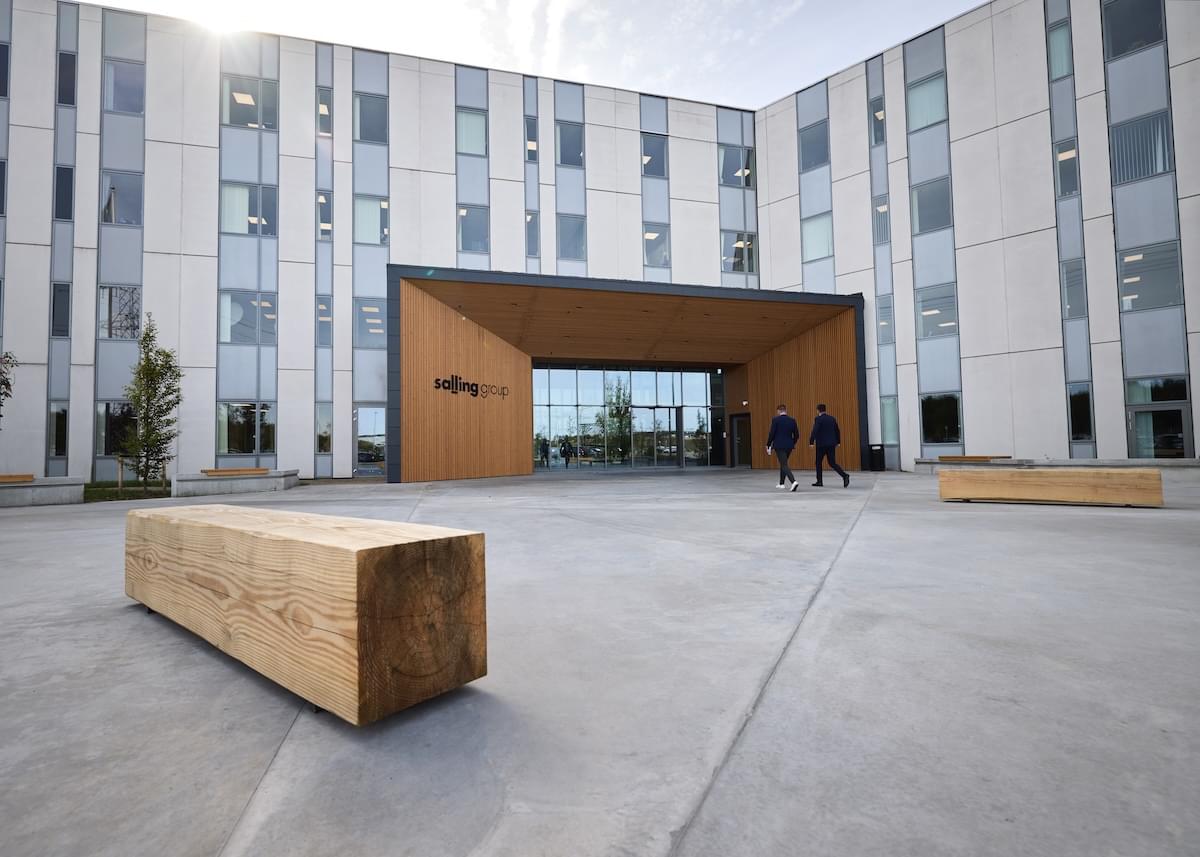
In recent years, Denmark’s Salling Group has seen increased omnichannel sales.
Founded in 1906 as a humble draper’s shop in the coastal city of Aarhus, it now operates more than 2,000 stores across six countries, making it one of Northern Europe’s largest retail players.
Along with its brick-and-mortar stores, Salling Group also operates a growing stable of ecommerce sites and digital services, including home delivery for its hypermarkets.
“Our goal is to make life easier for our 15 million weekly customers,” says Casper Svidt, CRM administrator at Salling Group. “And we do that with good prices, strong assortments, and convenient shopping experiences both in-store and online.”
But with a wide portfolio of retailers—all with different products, price points, and delivery models—meeting customer expectations can be daunting.
“Our marketing brands do not necessarily align one-to-one,” Anne-Cecilie Christensen, project manager at Salling Group, admits. “Customer knowledge and financial handling can be quite different—and that complicates delivering a consistent experience for our customers.”
Replacing friction with AI-driven conversations
Looking for CX solutions, a team from Salling Group attended a Zendesk event in Copenhagen in 2024—and a lightbulb went off.
“We were really impressed by other companies’ success using Zendesk AI agents and Quality Assurance,” Svidt explains. “And after our initial testing, we saw a huge potential in the program.”
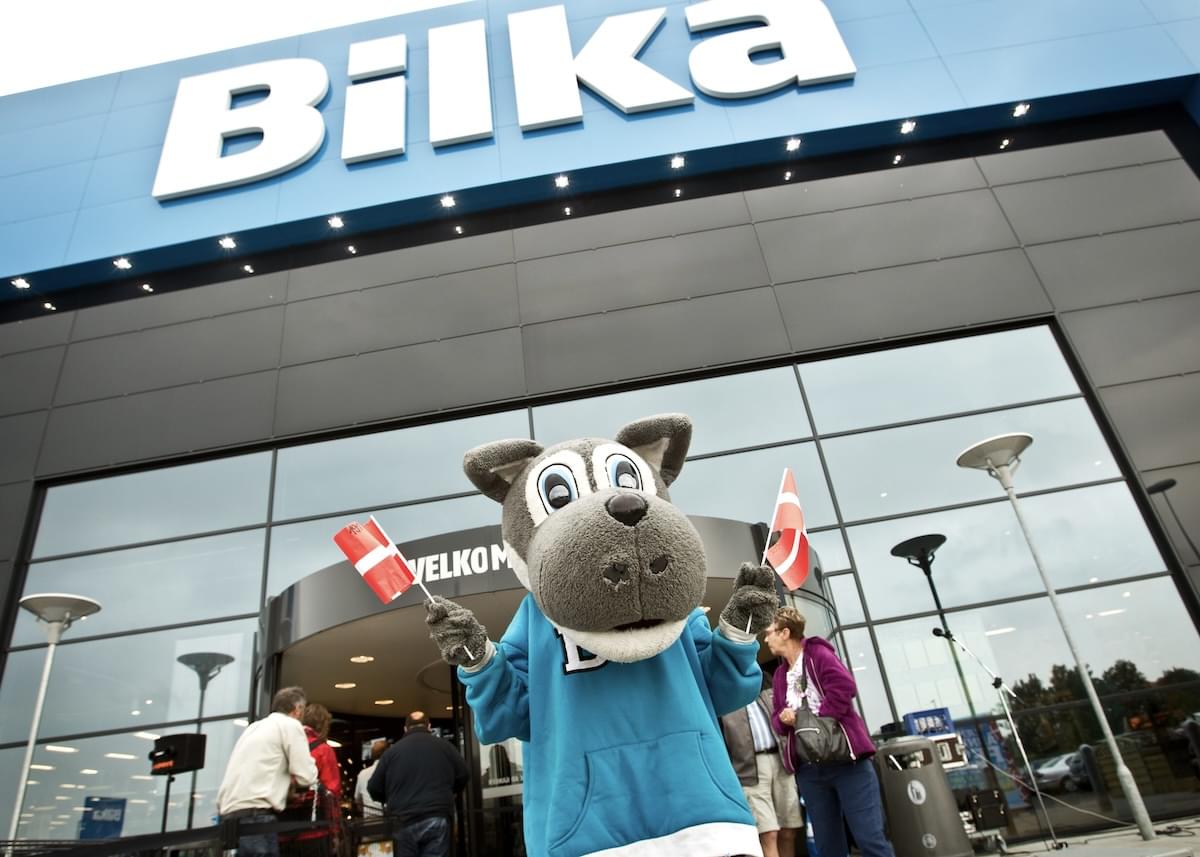
Salling Group was all-in. They rolled out Zendesk AI agents across three of the company’ largest websites: Bilka, Føtex, and BR. Powered by Zendesk Messaging, the new experience kept customers in a single conversational flow—allowing AI agents to guide customers to resolution without breaking the interaction.
“We’re no longer dependent on the customer making the right choice at the beginning of the conversation,” says Christensen. “Now there’s AI behind it—trying to find out what the customer actually needs.”
For customers, the change was obvious immediately. Instead of navigating a button maze, they could describe what they needed in their own words—and AI could respond with the right next step.
“I think the intent recognition plays a big role,” Christensen notes. “It removes the guesswork for customers.”
After making the investment in Zendesk AI, Salling Group set a modest 20 percent automation target.
“We were pretty conservative with our expectations,” says Christensen. “But pretty quickly—we saw an AI automation rate of 40 percent.”
In practice, that means almost half of all chat inquiries are autonomously resolved by the AI agent. These results held up even as volume increased. For the first time, the team could clearly see where and how AI was resolving customer inquiries.
“It was hard in the beginning to let go of some of the control,” notes Christensen. “But when I look at the numbers and the conversation logs, I trust it.”
Zendesk AI agents help lighten the holiday load
Peak shopping periods in November and December have traditionally put enormous pressure on Salling Group’s customer service teams. And for its toy brand, BR, that seasonal surge can account for nearly 70 percent of its total annual support volume.
“Christmas is the big one,” says Christensen. “Similar to Black Friday in the U. S., there’s a long week where Danish parents and grandparents traditionally do all of their holiday shopping.”
With less inquiry volume hitting the customer service team, wait times dropped by 20 to 30 percent compared to the previous year.
“AI agents give our team the capacity to focus on complex cases rather than answering repetitive questions,” says Svidt. “That has had a huge impact on the wait times for our customers.”
As automation scaled, Salling Group also turned its attention to quality. Zendesk Quality Assurance helps the team review written interactions at scale—ensuring customers receive thoughtful, personalized responses even as volumes increase.

A knowledge base rewritten for AI—from the ground up
Early in the Zendesk AI rollout, Salling Group saw an opportunity to evolve its Help Center content to better support generative AI.
“The information was accurate, but it was designed for reading instead of conversational resolution,” says Svidt.
The team updated its Help Center articles, created brand-specific content where needed, and added labels and search rules. This ensured AI agents could consistently identify and deliver the right information for each brand and customer scenario.
“Our goal was to keep the experience simple for customers,” Svidt explains. “But it required rethinking how content was structured and surfaced.”
With content structured to better support AI, AI agents are now able to autonomously resolve more customer questions by providing the right answers at the right time.
“Now we have a system that we can rely on,” adds Christensen.

Building the next phase of automation
Just months after launching its third AI agent, Salling Group is already evolving its operating model. Instead of treating AI as a one-time implementation, the company is reallocating resources to continuously optimize AI performance.
“We have the store team and we have the ecommerce team,” says Christensen. “And now, we’re building a small AI agent team.”
Salling Group plans to expand AI agents to more brands and invest in deeper backend integrations that allow customers to complete actions end-to-end through self-service.
“This is a need-to-have level now,” Christensen says. “We’re entering the phase where we really want to leverage everything AI agents can do.”