Zendesk vs. Intercom
The Zendesk Resolution Platform is built on an architecture designed for service — resilient, governed, and able to scale. Intercom’s messaging-first foundation leaves critical gaps as support teams mature. Start your Zendesk AI free trial today to see the difference and why so many leading brands trust Zendesk as their service partner.

Last updated February 27, 2026
Why companies are switching from Intercom to Zendesk
Intercom was designed as a web messaging solution and is still adapting to service. Teams using Intercom have encountered underpowered SLAs, lightweight workflows, and the need to add tools or workarounds to handle core support processes—driving up costs and complexity.
Zendesk was purpose-built for service from the start. With 18 years of operational maturity and 100,000+ customers worldwide, our AI, data models, and workflows are shaped by real support volume and real resolutions. When service is mission-critical, organizations choose the platform built to resolve, not just respond.
At Zendesk, we believe getting to real resolutions quickly and accurately is critical. We believe an AI-first approach to service requires that any solution be designed with the four core principles in mind.
- Trusted. This provides the foundation for reliable, secure service at scale.
- Precise. Purpose-built for service, delivering value without the need for training or customization.
- Guided. Service that takes action and guides you based on previous learnings.
- Unified. One platform for all channels, agents, and service models.
Let’s explore each principle in more detail with a comparison between Zendesk’s Resolution Platform and Intercom’s approach.
Trusted: Experience you can count on
In 2026 alone, 1.7 billion people—roughly one in five worldwide—used Zendesk to connect with a business, employer, or government. They trust us because Zendesk delivers 99.9% uptime, certified compliance (SOC 2, ISO 27001), and AI trained on 18B+ interactions in over 80 languages.
Intercom’s model charges for “resolved” interactions even when issues go unanswered, and reviewers report that the AI can “infer information that isn’t true” and produce “unpredictable” costs. Zendesk backs its claims with scale, experience, and a platform built for high-volume global operations.
Precise: Purpose-built for service excellence
Intercom’s lightweight framework can create limitations as requirements grow—restricted SLAs, no native QA, inconsistent automation, and reporting that has been described as unreliable.
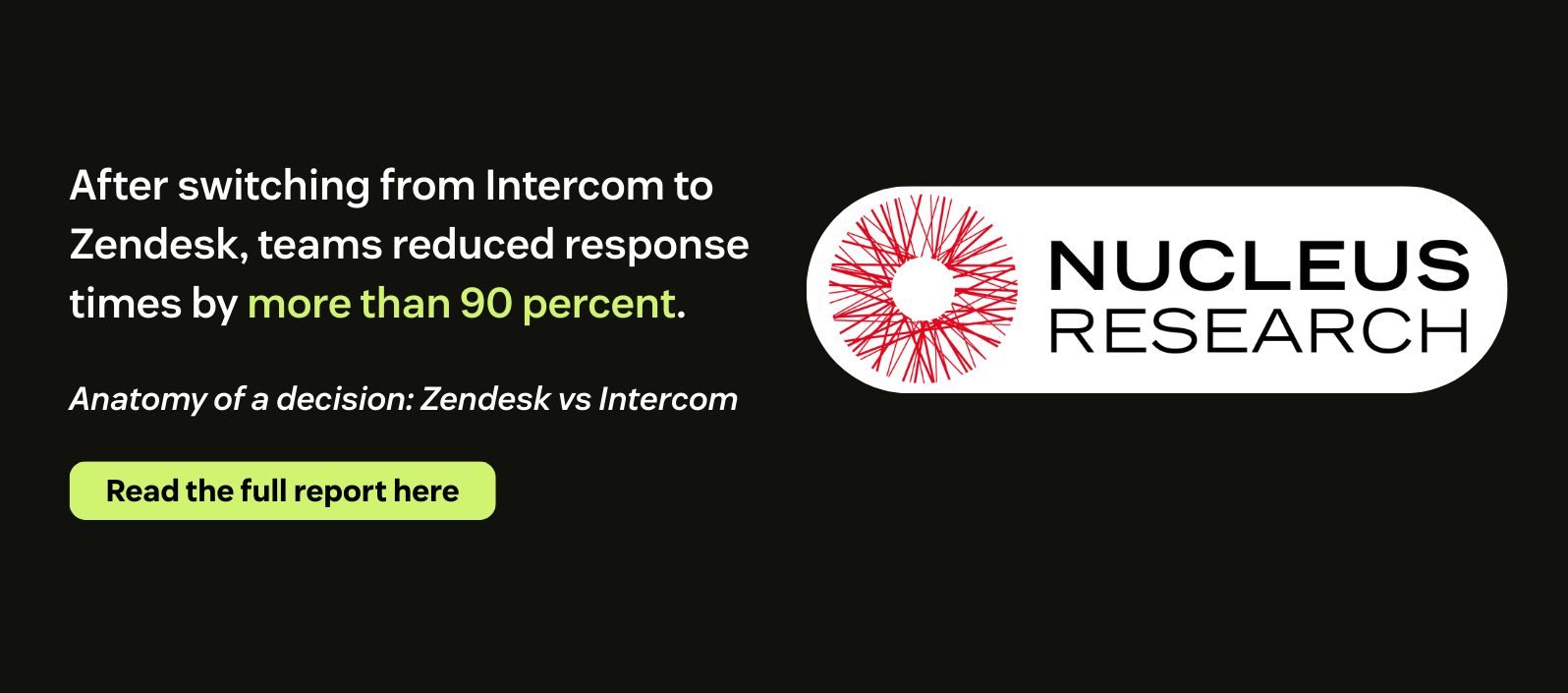
Zendesk provides deep configurability, strong automation, and granular controls support leaders depend on. Nucleus Research found companies switching from Intercom to Zendesk reduced response times by 61%. It’s the difference between a platform designed for service and one adapted to it.
Guided: AI that’s proven, not promised
Zendesk offers built-in QA, a pre-trained proactive AI copilot, and automated guidance that helps agents improve quality and speed with every interaction.
Intercom lacks QA, and analysts from Nucleus research uncovered serious reporting accuracy issues. Customer reviews like this one agree that without visibility into performance, teams struggle to improve.
Zendesk surfaces trends, gaps, and opportunities through clear, customizable dashboards.
Unified: One platform that just works
With Intercom, service teams often rely on add-ons and third-party tools for core service needs, increasing the risk of fragmented workflows and inconsistent data.
Zendesk takes the opposite approach: a unified workspace with native AI, ticketing, QA, WFM, and every channel connected. Nucleus analysts note Zendesk is better suited for organizations with “multiple products, brands, or support tiers”, and customers like Propelus validate this in practice—replacing paid add-ons, eliminating silos, and saving 2,480 hours of manual work within months. When everything runs on one platform, teams stay aligned and operations just work.
More in this guide:
- Core pillars of service: Where Zendesk gets it right every time
- Zendesk vs. Intercom: Features comparison
- Zendesk vs. Intercom pricing: Replace confusion with transparency
- Intercom customers are moving to Zendesk, and here's why
- Frequently asked questions
- Set a new bar for your customers. Switch to Zendesk.
Core pillars of service: Where Zendesk gets it right every time
|
Core service pillars |
Zendesk
|
Intercom
|
|
Trusted |
Translate the agent workspace with dozens of languages |
Agent workspace can be translated into 7 languages |
|
Extensive ecosystem with 1800+ apps |
A smaller integration library (~450 apps) | |
|
Predictable AI pricing |
AI fees based on abandoned or assumed resolutions | |
|
Precise |
Build and manage SLA & OLA with granular reporting |
Build & manage separate SLA for each channel, no OLA options |
|
Generative AI agents for triage, routing, and complex flows |
Generative bot best suited for low complexity questions | |
|
Deep & reportable team collaboration with side conversations |
Collaborate with @mentions (unavailable for reporting) | |
|
Guided |
Proactive, agentic copilot that anticipates next steps |
A copilot dependent on manual prompting |
|
Advanced native reporting for service leaders |
Lightweight reporting; teams may require third-party tools | |
|
Quality assurance within the core platform |
No native quality assurance | |
|
Unified |
Customizable, multi-channel workspace built for service teams |
A messenger workspace adapted to customer service |
|
True omnichannel with predictable costs across voice, chat, email, social, WhatsApp, and more |
Multi-channel but with usage-based fees for SMS, WhatsApp, voice, and outbound messaging. | |
|
Native workforce management |
No WFM; requires 3rd party integration |
Zendesk vs. Intercom: Features comparison
AI agents
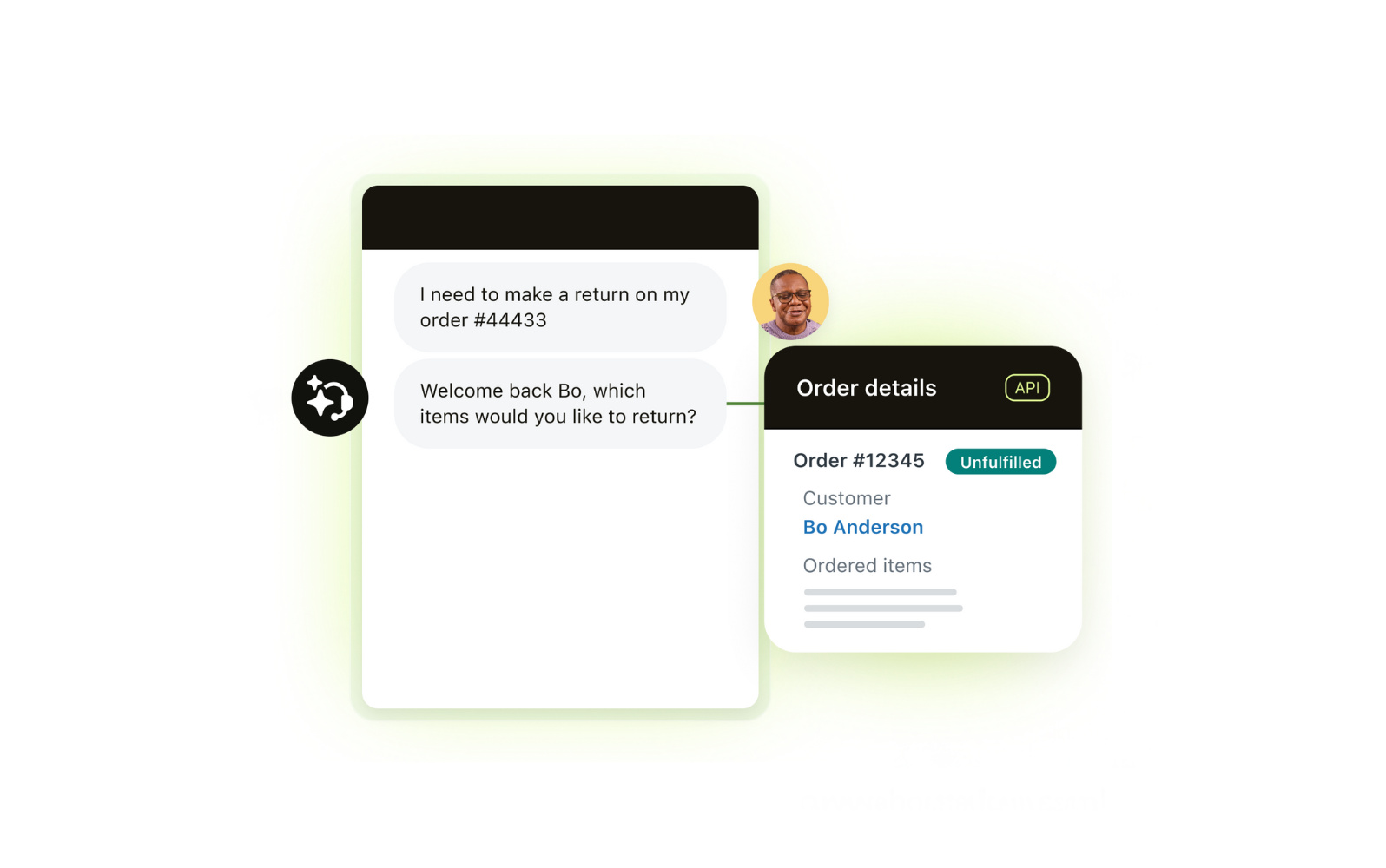
See the future of customer service with Zendesk’s AI agents.
Zendesk AI is trained on billions of real interactions and resolves up to 80% of questions autonomously across 80+ languages. It works independently, handles complex flows, and can be launched.
Intercom’s Fin remains reactive, struggles with complexity, and supports far fewer languages—limiting global consistency.
AI copilot
Zendesk’s copilot guides agents proactively with intent, sentiment, and contextual suggestions grounded in the full customer history.
Intercom’s copilot requires manual prompting and offers limited real-time guidance. Customers switching to Zendesk reported a 54% improvement in resolution times.

Experience intelligent CX with Zendesk AI.
Unified omnichannel workspace
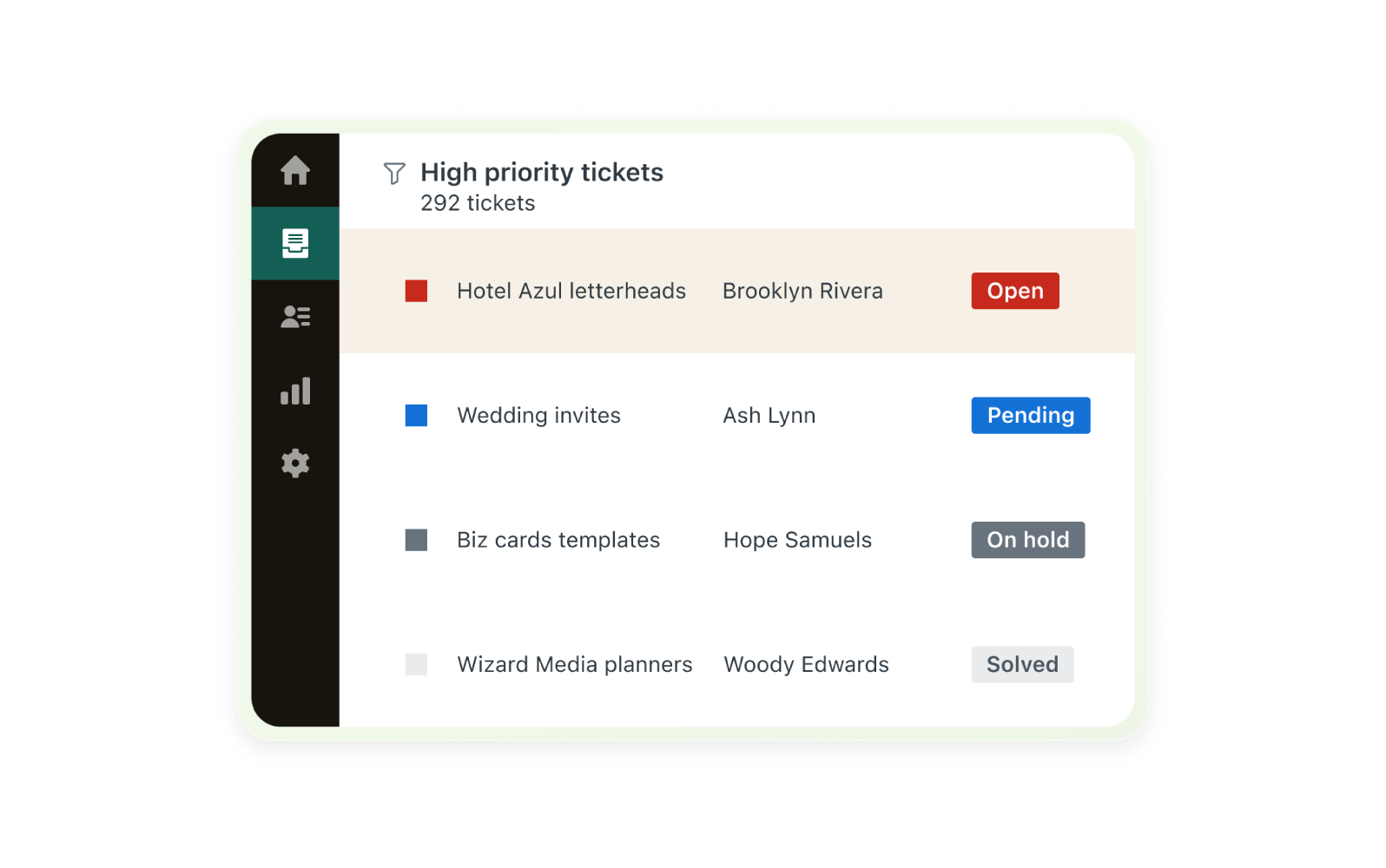
Learn more about the Zendesk Agent Workspace.
Zendesk brings email, chat, SMS, voice, WhatsApp, social messaging, and more into one mature, unified workspace with proven routing and AI-powered voice.
Intercom offers multiple channels, but several require additional fees. Agents often switch between channels, reducing day-to-day agent efficiency.
Reporting and analytics
Zendesk provides robust reporting out of the box—pre-built dashboards, custom reports via natural-language prompts, and visibility into trends and operational performance.
Intercom focuses on conversational metrics and lacks deeper reporting capabilities service leaders rely on.

Learn more about robust reporting and analytics from Zendesk.
Quality assurance and workforce management
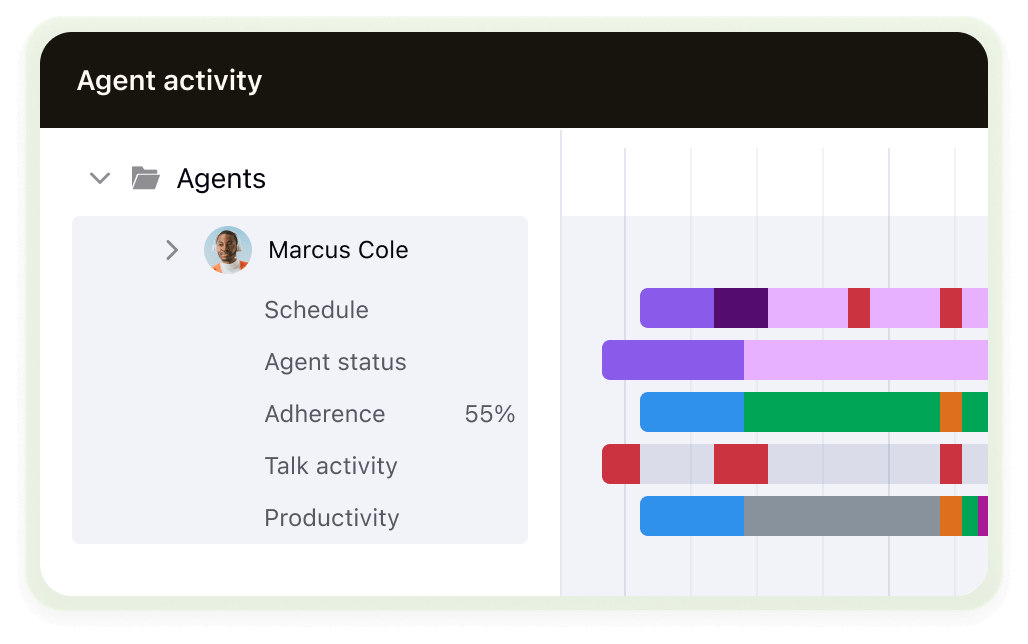
Discover Zendesk quality assurance and workforce management tools.
Zendesk includes native QA and WFM so teams can evaluate performance, improve consistency, forecast demand, and schedule effectively.
Intercom does not offer native QA or WFM, requiring third-party tools to fill foundational gaps.
Integration ecosystem
Zendesk’s marketplace includes 1,800+ vetted integrations with platforms like Salesforce, Jira, Shopify, and Slack—built on mature, reliable APIs.
Intercom’s smaller catalog (~450) offers limited visibility into functionality and depth, often requiring custom workarounds as needs expand.

Explore our plug-and-play integrations in the Zendesk Marketplace.
Zendesk vs. Intercom pricing: Replace confusion with transparency
|
Zendesk |
Intercom |
|
AI capabilities are add-ons, no matter the plan:
|
|
*Plans are billed annually. | |
Valuable service features like SLA sit behind Intercom’s highest tier, and AI is always an add-on—charging $0.99 per “resolution,” including abandoned chats. Costs escalate quickly.
Zendesk offers predictable plans that scale with your needs. Setup is fast, training is simple, and teams achieve a lower total cost of ownership without hidden AI fees.
Intercom customers are moving to Zendesk, and here's why
Across industries, companies migrate to Zendesk for its maturity, depth, and proven service foundation.
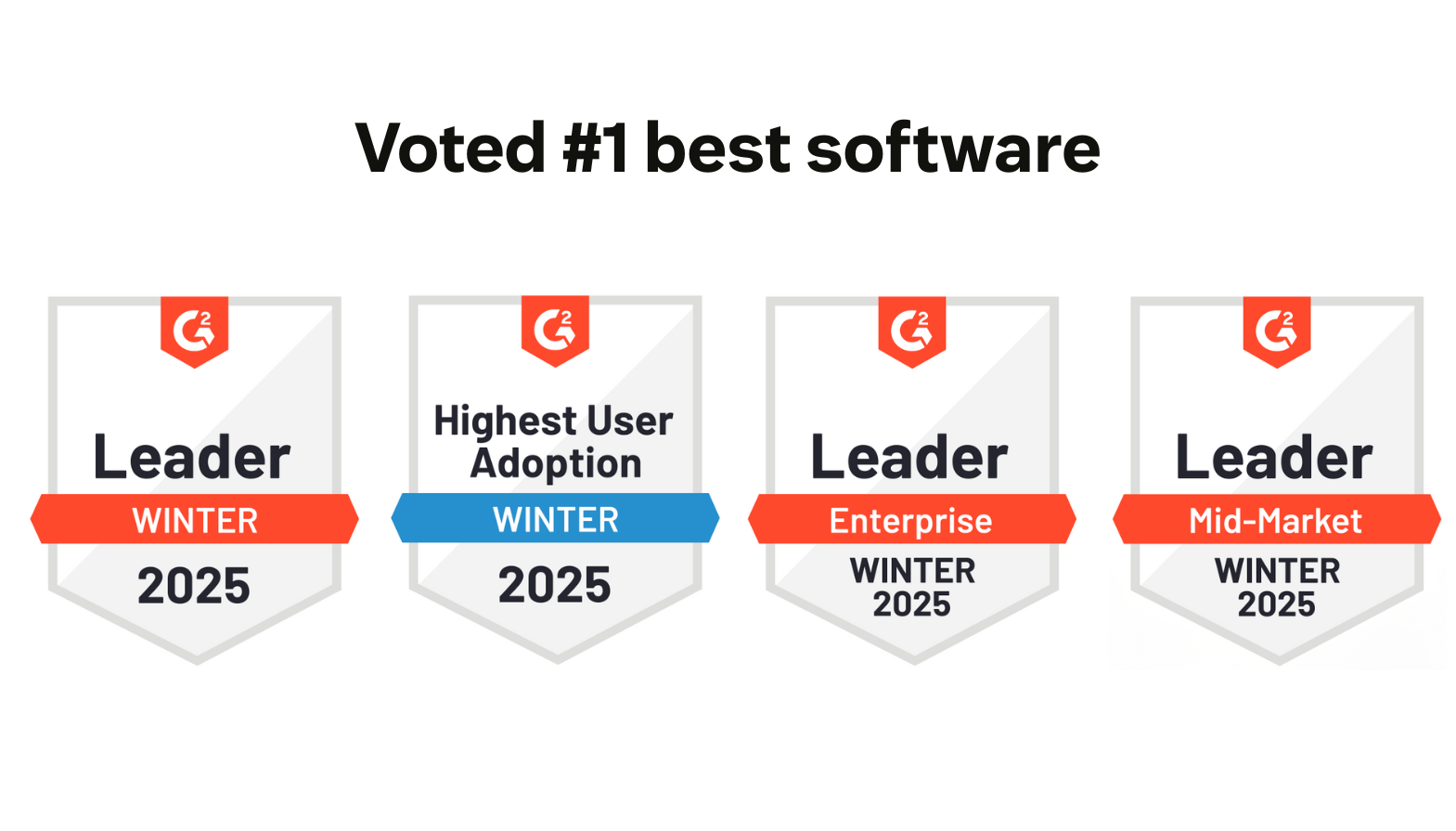
With over 160,000 customers across all industries and regions, Zendesk has the CX expertise to provide you with best practices and thought leadership to increase your overall value. But don’t just take our word for it—listen to what customers say about why they picked Zendesk.
Propelus

“Some people think AI will take jobs away, but actually it’s the opposite. The AI agent answers easy questions and that frees up agents for more creative problem solving."
—Meg Smith, Senior Director of Customer Support at Propelus
Reprise

“There were a lot of shortcomings with the previous solution, because we couldn’t get the full messaging history or properly track different ticket queues–things that were super important to us. We sorely needed the ability to create a better help center and documentation. So we chose Zendesk and haven’t looked back.”
—Paul Vidal, VP Customer Success at Reprise
Storage Scholars

“The app integration is probably our strongest use of Zendesk. Being able to text back and forth with customers makes the business feel super personal. I am absolutely positive that enhances our sales conversion rate dramatically.”
—Matt Gronberg, Co-Founder and Chief Operating Officer at Storage Scholars
Frequently asked questions
Set a new bar for your customers. Switch to Zendesk.
Unlike Intercom, Zendesk is scalable, intuitively designed for CX, and offers a low total cost of ownership. Businesses of all sizes can rely on our customer experience solution to enhance their CX with a unified omnichannel workspace, extensive integrations, top-notch security and compliance, robust reporting and analytics tools, and advanced AI and automation. Try Zendesk for free and experience it for yourself.
Zendesk vs. the rest: Compare the software
See how Zendesk stacks up to other comparable software.
Related posts

What is a ticketing system? (+3 ways companies use them)
Use ticketing systems to efficiently manage high ticket volume, deliver timely customer support, and boost agent productivity.

CRM buying guide
Sales teams can use robust CRM solutions to generate new leads, automate email campaigns, and produce forecasting reports and advanced analytics.

Top 10 customer engagement metrics to measure in 2026
By monitoring customer engagement metrics, you can understand how your audience is responding to your marketing content—and what could be improved to encourage more engagement

Customer relationship management: A guide
In this customer relationship management guide, Zendesk explains how CRM software can help build relationships with customers, boost engagement, and lead to better business outcomes