Article • 7 min read
AI chatbot use cases for customer service
Deliver faster, more consistent customer service with AI chatbots. Learn about the use cases that improve satisfaction and reduce workload.


Candace Marshall
Vice President, Product Marketing, AI and Automation
Senast uppdaterad March 20, 2026


What is an AI chatbot?
An AI chatbot is software that uses artificial intelligence and natural language processing (NLP) to understand and respond to human interactions. With these capabilities, the chatbot can interpret intent, recognize context, and generate human-like responses. In customer service, businesses use AI chatbots to answer questions and automate support interactions without relying entirely on human agents.
AI chatbots: Redefining modern customer service
AI chatbots are redefining modern customer service across industries. Organizations use AI chatbots to reduce wait times, provide 24/7 support, and deliver consistent answers at scale. According to Zendesk’s 2026 CX Trends Report, 74% of consumers now expect customer service to be available 24/7 due to AI.
AI has also raised the bar for speed and precision. The same research shows that 86% of consumers say fast responses and accurate resolutions influence whether they purchase from a brand. Meanwhile, 85% of CX leaders state that customers will drop brands over unresolved issues—even on first contact.
By automating repetitive inquiries and assisting human agents, AI chatbots help lower costs while preserving service quality. As adoption accelerates, AI chatbots are becoming a standard component of high-performing customer experience strategies.
More in this guide:
- How AI chatbots are transforming customer service
- Key use cases of AI chatbots in customer service
- Examples of businesses using AI chatbots to improve customer experience
- Frequently asked questions
- Elevate customer service with AI agents
How AI chatbots are transforming customer service
AI chatbots are changing how customer service teams deliver support across digital channels. They respond instantly, automate routine requests, and assist human agents during live conversations. This shift allows teams to scale service without increasing headcount.
Modern AI chatbots go beyond FAQ automation. They support multilingual conversations, enable proactive engagement, and connect with backend systems for contextual responses. These capabilities help businesses deliver faster, more consistent customer experiences.
Key use cases of AI chatbots in customer service
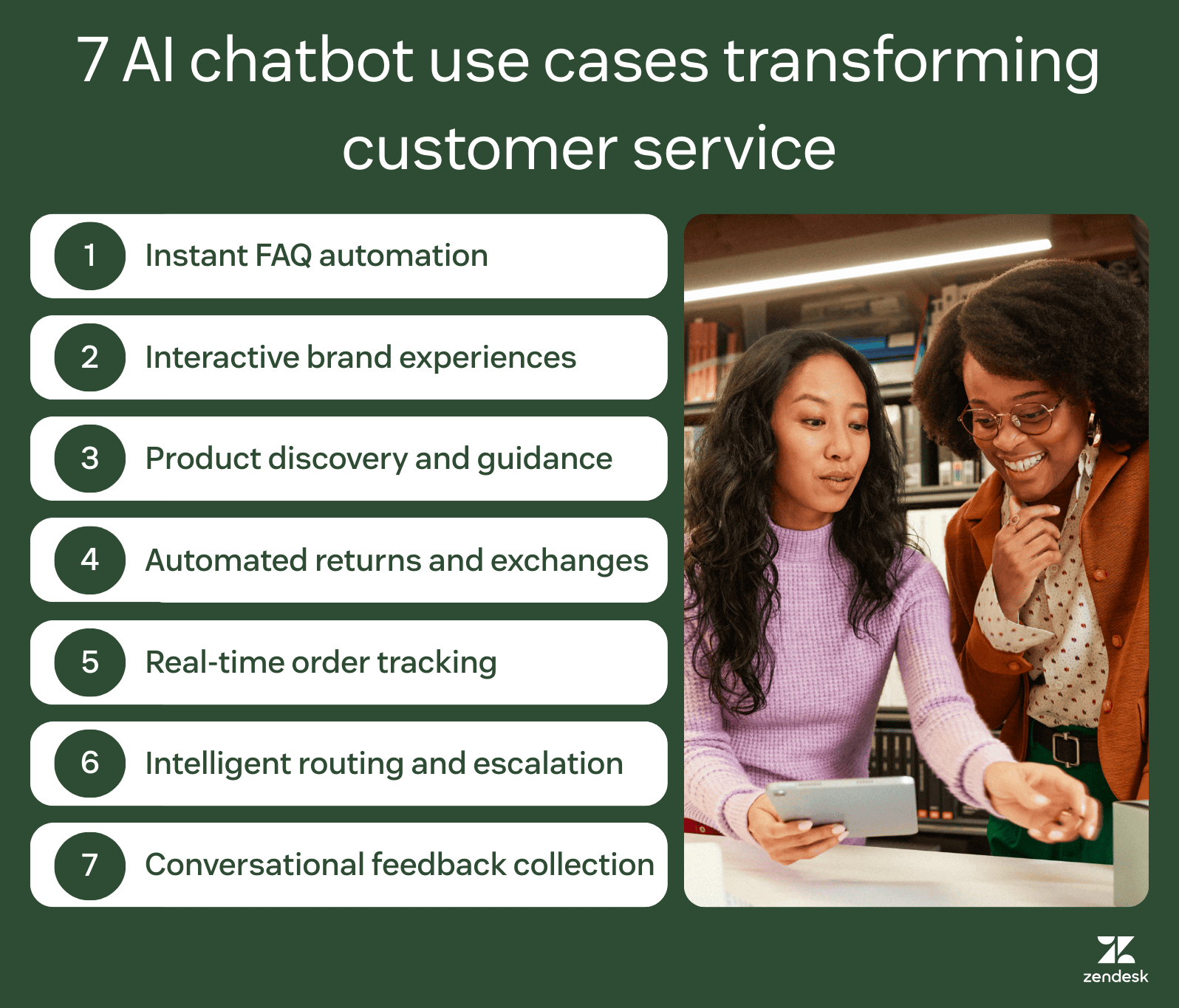
AI chatbots support customers at every stage of the service journey. They handle repetitive questions, guide users through processes, and assist agents behind the scenes. The following use cases show how businesses apply AI chatbots to automate workflows, reduce manual effort, and resolve issues faster.
Instant answers to high-volume customer questions
AI chatbots provide instant answers to high-volume customer questions, including topics like pricing, account access, and policy details. They often rely on structured content from aknowledge base to deliver accurate responses at scale. They’re available 24/7 and respond during peak periods such as product launches or seasonal spikes, which wouldn’t be possible for human agents. Meanwhile, support teams can focus on complex issues that require human judgment.
Interactive and engaging brand experiences
AI chatbots create interactive and engaging brand experiences within customer service conversations. A clearly definedchatbot persona helps ensure responses reflect brand voice and values. These conversational experiences feel more dynamic than static web forms or FAQ pages. As a result, businesses can strengthen brand perception while making support more intuitive and accessible.
Product discovery, availability checks, and smart recommendations
AI chatbots help customers find products, compare options, and check real-time availability without leaving the conversation. They ask clarifying questions to narrow choices and surface relevant recommendations based on customer input. By connecting to inventory or account systems, AI chatbots can confirm stock levels or service eligibility instantly. This approach improves the buying experience while reducing repetitive lookup tasks for support teams.
Automated returns and exchange management
AI chatbots guide customers through return and exchange requests using predefined company policies. Many teams design these flows using a structuredchatbot template to ensure clarity and consistency. When requirements are met, they can initiate the return workflow or generate instructions automatically. This process reduces repetitive manual work for agents and delivers faster resolutions for customers.
Real-time order updates and shipping tracking
AI chatbots provide real-time order updates and shipping status without requiring customers to contact support. They confirm purchases, share tracking links, and surface delivery estimates directly within the conversation. This automation reduces inbound inquiries about order status and frees agents from repetitive tracking requests. Customers gain greater transparency and confidence throughout the post-purchase experience.
Intelligent routing and seamless escalation to agents
AI chatbots triage incoming requests and route conversations to the right team members. They identify customer intent, collect key details, and create structured tickets when needed. When an issue requires human support, they escalate the conversation with full context attached. This hybrid model allows automation to handle simple issues while agents resolve more complex cases.
Conversational surveys and feedback collection
AI chatbots collect customer feedback directly within service conversations. They ask short, contextual questions at natural points in the interaction, which create less friction than standalone email surveys. Businesses gain timely insights while keeping the feedback process simple for customers.
Examples of businesses using AI chatbots to improve customer experience
AI chatbots are no longer experimental. Leading organizations across a range of verticals rely on AI chatbots to automate conversations and improve key performance metrics. The examples below show how AI chatbots drive faster resolutions, higher satisfaction, and operational efficiency.
Dunlop Sports

Dunlop Sports centralized support across voice and digital channels to manage rapid growth in customer demand. The team handles roughly 275,000 interactions per year, with chat volume increasing by 168%. Despite rising volume, Dunlop reduced answer times by 89% and maintains a 95.3% CSAT score.
Liberty London
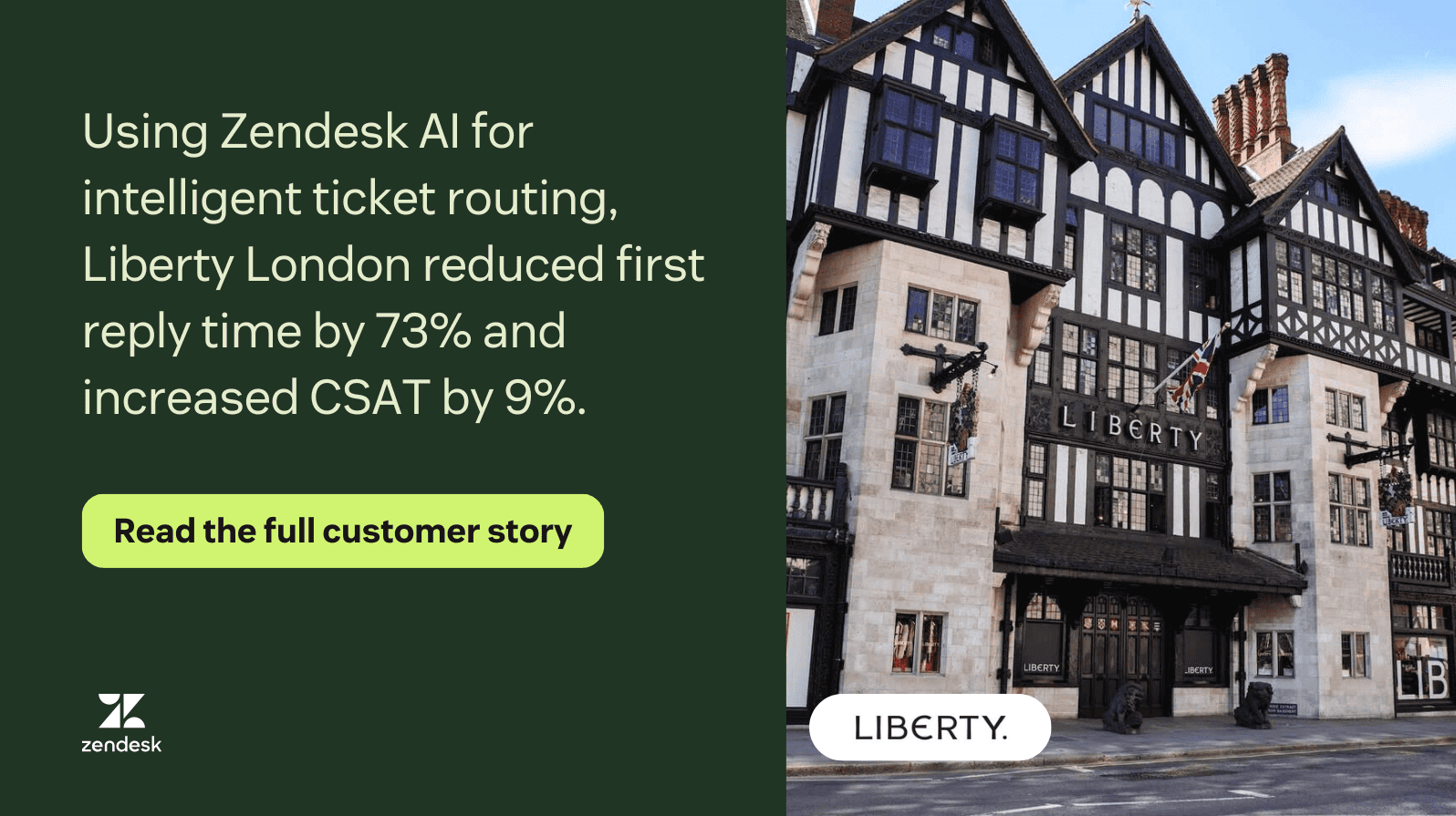
Liberty London uses Zendesk AI to automatically classify and route customer support tickets to the right team. Intelligent triage reduced first reply time by 73% and improved overall resolution speed by 11%. As a result, Liberty increased CSAT by 9% while maintaining personalized service during busy periods.
Lush
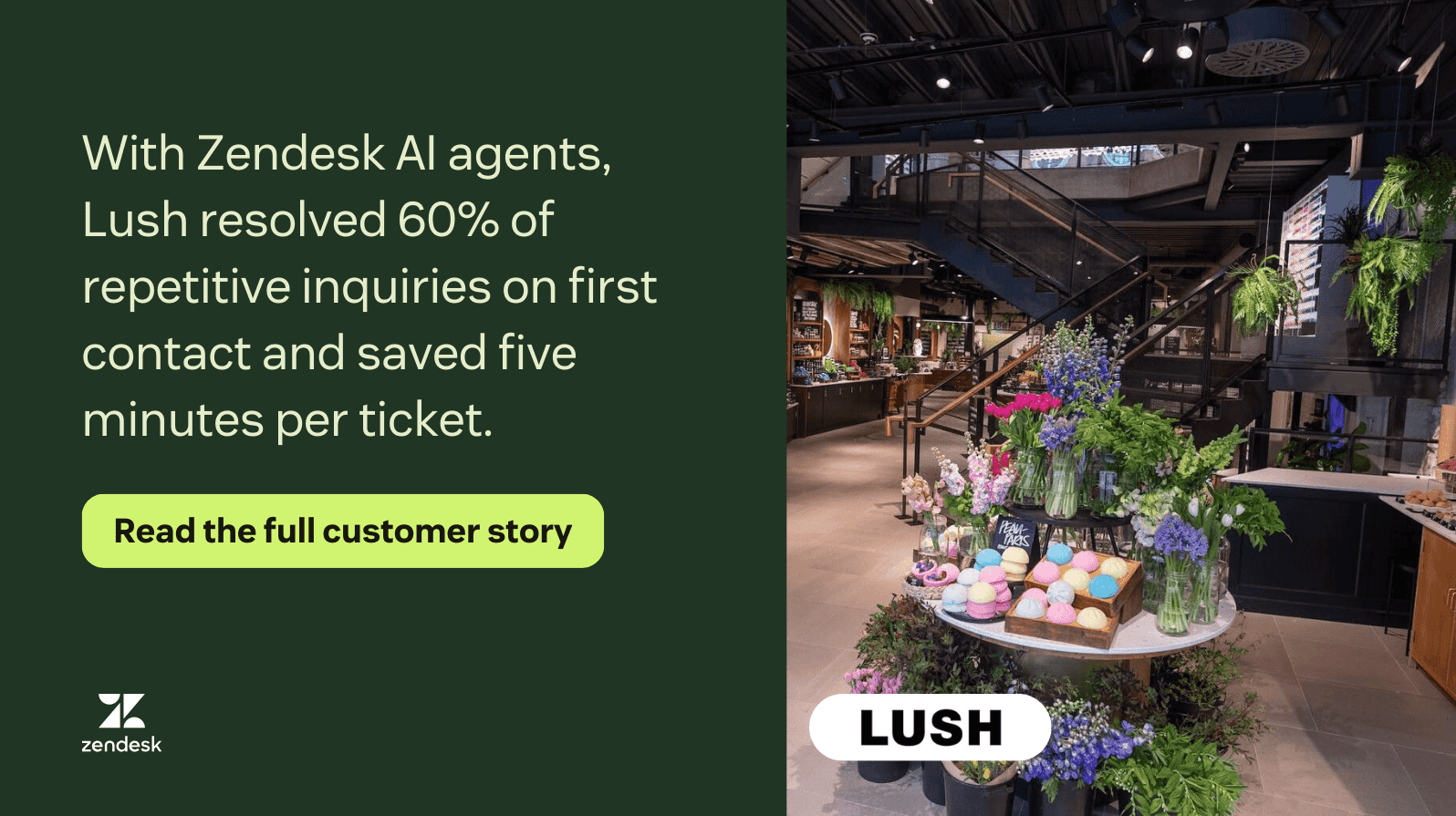
Lush deployed a custom AI agent to resolve repetitive customer questions about discounts, donations, and discontinued products. The AI agent achieved a 60% first contact resolution rate and saved roughly five minutes per ticket. By automating common requests, Lush maintains a 93% CSAT score while freeing agents to focus on meaningful conversations.
Best Egg
Best Egg uses Zendesk AI to automate 80% of chat inquiries while maintaining strict compliance standards. This approach reflects best practices for a modernfintech chatbot operating in a regulated environment. By keeping AI responses within approved content guardrails, Best Egg delivers faster, consistent guidance in a highly regulated industry.
Frequently asked questions
Elevate customer service with AI agents
AI chatbots are reshaping customer service by improving speed, consistency, and accessibility across channels. Businesses use them to automate repetitive tasks, support agents, and deliver timely responses at scale. As customer expectations continue to rise, service teams need AI that works seamlessly alongside people.
Zendesk AI agents extend these capabilities by resolving complex requests, routing conversations intelligently, and assisting agents in real time. Built specifically for customer service, Zendesk AI agents operate within trusted knowledge and defined workflows to deliver accurate, personalized support. With automation and human expertise working together, Zendesk helps businesses create support experiences that are efficient, compliant, and genuinely helpful.