Article • 4 min read
3 things startups get wrong about customer support
The hidden support missteps that stall retention, strain teams, and slow your momentum.


Jenna McCrory
Group Manager, Global Startup Marketing
Ultimo aggiornamento February 17, 2026


It’s been a busy quarter. Sales are up and you’ve onboarded a whole set of new accounts. You’re feeling good. But then you check in with your founders about quarter-over-quarter churn, and it’s ticked up 3%.
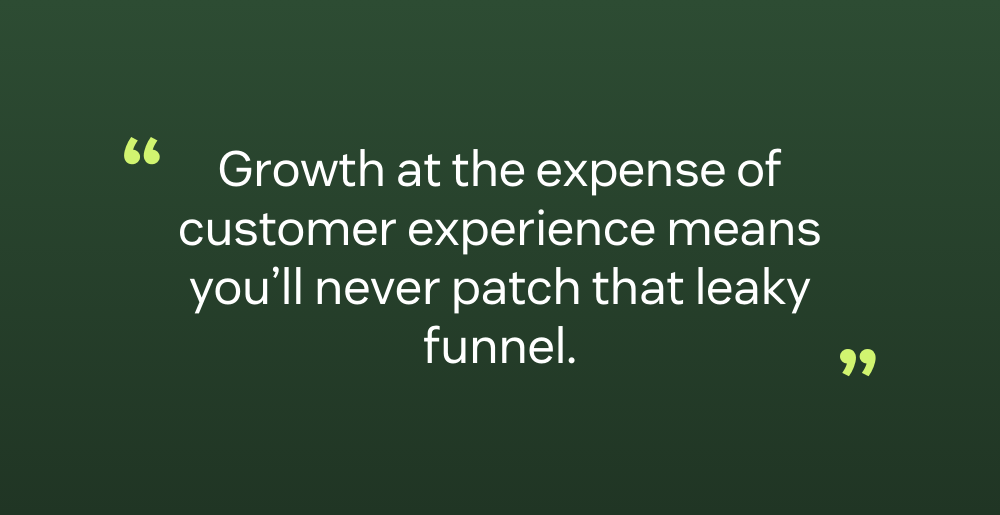
Why? If the answer isn’t immediately clear, you’re not alone. Most early-stage founders focus on funding, fine tuning PMF, or acquiring new customers. You’re ecstatic about growth. But growth at the expense of customer experience means you’ll never patch that leaky funnel.
Unfortunately, this is where many startups go wrong. That doesn’t have to be the case for your business. Here are three common mistakes startups make when it comes to customer support, plus advice for what to do instead:
1. Scaling support without a clear strategy
Most startups’ early customer support are founding team members. It’s a lean team, everyone knows the product intimately and can wear a variety of hats. Sure, this strategy might work early on, but what’s the plan for handling complex customer issues or spikes in ticket volume after your product gains traction? Who’s taking the lead on maintaining a consistent tone and response time?
Scaling customer support without a clear strategy in place will run your already lean team into the ground—and jeopardize the customer experience. It’s reactive and risky.
Instead, savvy startup leaders are all about building systems for efficiency and automation, especially when founders transition from being in charge to delegating the work. This includes thoughtfully hiring new team members to fill gaps (skills, and otherwise); designing workflows built to scale from the start; and measuring key CX metrics like customer satisfaction (CSAT), customer effort (CES), and more.
That way, support teams feel empowered with the resources, tools, and insights they need to deliver consistent and satisfying customer experiences.
2. Using point solutions that don’t talk to each other
Speaking of designing scalable workflows, another mistake startups often make is adopting multiple tools to solve immediate, but disparate problems. Once the problems are handled, the support team is left with a patchwork of quick fixes—a free tool here; a shared inbox there—that don’t actually sync with one another.
To avoid this, startups can:
- Choose an all-in-one CX solution: Platforms like Zendesk integrate with popular CRMs, marketing platforms, and collaboration tools out of the box. This ensures data flows smoothly across systems, enhancing productivity.
- Prioritize centralized multi-channel support: Ensure email, chat, phone, social media, and self-service portals are unified into one platform. This centralization enhances team efficiency and customer experience consistency.
- Look for scalable pricing models: Opt for a pay-as-you-grow approach to reduce upfront investment risk. Startups can pick plans matching their budget, then grow into more advanced features.
3. Underestimating the value of knowledge in CX
Startups move quickly and documenting processes is usually first to fall off the to-do list. But skipping out on building a knowledge base can be detrimental to your growth.
Without a central, evolving source of truth, your team will repeatedly answer the same questions, new hires will miss out on critical onboarding steps, and self-service tools won’t get developed.
Here’s what to do instead:
- Encourage teams to capture knowledge where it happens: Ask each team member and department to document their processes, e.g., turn a detailed Slack answer into a document.
- Turn ticket resolution into content: Frame each customer interaction as a chance to add a new article to your knowledge base. That way, you continue to build out your library of resources.
- Choose CX software that eases friction: Look for software that is easy to use, scalable to accommodate growing teams, and enables you to add tools like AI agents.
Common questions startup leaders ask about AI in customer support
1. Where do startups go wrong with scaling?
Most startups scale people before they scale their processes. Without automation, routing, and clear workflows, volume spikes lead to chaos, not growth.
2. How can startups avoid siloed data?
Disconnected tools create data silos, forcing customer support teams to work without context. A unified CX platform keeps every interaction connected and consistent.
3. Why do startups underestimate the value of a knowledge base?
Skipping documentation slows teams and frustrates customers. A living knowledge base powers self-service, consistency, and faster resolutions.
4. How can startups begin to build out a knowledge base?
For startups that either don’t have a knowledge base, or have one that is incomplete or out of date, Zendesk Knowledge Builder uses ticket data and generative AI to quickly create a new knowledge base with up to 40 articles.


